In a nutshell
- Solar scientists expect Solar Cycle 25 to have a double peak, extending the window for aurora activity well into 2026.[1]
- Visible aurora roughly 8 months a year, from late August through mid-April, so shoulder-season trips still work.[2]
- Northern Lights Tour with Guaranteed Sightings: 8 hours, groups capped at 8, and a full refund if viewing is impossible.[3]
- A live English-speaking guide, pickup included, and free cancellation up to 24 hours before you go.[3]
- January averages between -30 and -15 degrees Celsius in Rovaniemi, so pack for deep cold.[4]
- Top choice Guaranteed Sightings from US$228 Duration8 hours[3]Rating4.64 from 4,381 reviews[3]Group sizeLimited to 8 participants[3]CancellationFree cancellation up to 24 hours[3] Check availability
- Wilderness Tour from US$148 Duration4 hours[5]Rating4.34 from 1,530 reviews[5]Group sizePrivate or small groups available[5]CancellationFree cancellation up to 24 hours[5] See this tour
- Snowmobile Safari from US$160 Duration4 hours[6]Rating4.33 from 1,135 reviews[6]Group sizeNot specifiedCancellationFree cancellation up to 24 hours[6] See this tour

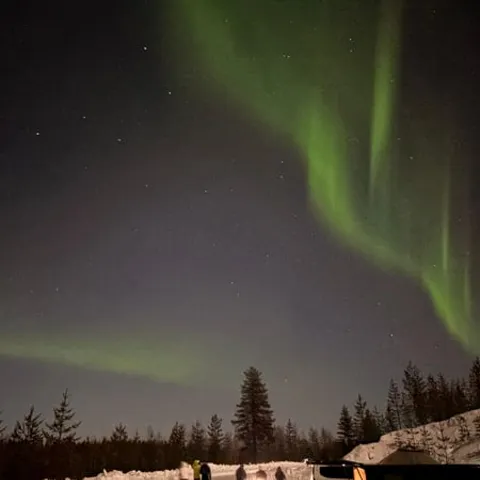
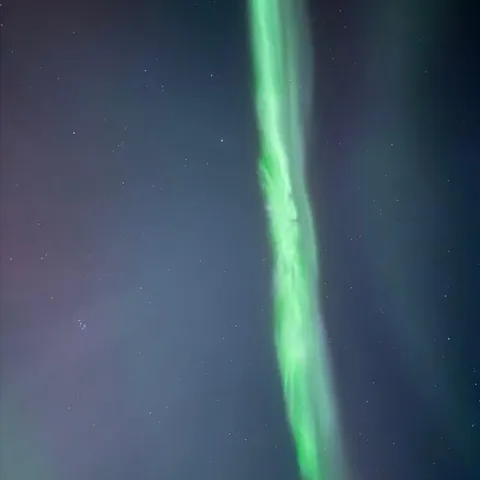
Solar scientists now believe that Solar Cycle 25, the one we’re in right now, will have a double peak, extending the window for aurora activity well into 2026.
Solar maximum makes this a good stretch to chase auroras
Read before booking
- Check the aurora forecast and cloud cover for the nights you are considering
- Choose a tour with a viewing guarantee if a blank sky would spoil the trip
- Book early for December, when up to 10,000 people a day land at the airport.[7]
- Compare the from-prices of the aurora tours before you commit
Solar Cycles and Peak Years, Explained
The sun does not shine with a steady, even light. Its magnetic field twists and reorders itself, and the number of dark sunspots on the disc rises and falls over a long cycle. Around the quiet years the sun can look almost blank. Around the busy years, dark patches cluster across the visible surface and the whole star turns restless. That restlessness is what aurora watchers look for, because the same activity that builds sunspots also sends more charged material streaming into the space around Earth.
A single number gives you a rough way to track that restlessness. The Kp index ranges from 0 to 9, and for Kp in the range 0 to 2 the aurora will be far north, quite dim in intensity, and not very active.[8] A higher reading tells you the disturbance has grown, though what you see from the ground still depends on cloud, moonlight and how far north you are standing. You do not need to memorise the scale. It is enough to know that a low number is not a verdict on your night.
Rovaniemi sits well inside the belt where the lights are a normal part of winter. Visible aurora appears here roughly 8 months a year, from late August through mid-April.[2] The Finnish word for the northern lights is revontulet, which literally means fox fires, and a Sami legend says the lights are caused by a magical fox running across the Arctic fells.[9] That long season is the reason a trip here can be built around your holiday dates rather than around one make-or-break night.
Coronal Mass Ejections and the Journey to Earth
The sun does not only shine. From time to time it erupts and flings a cloud of charged particles and magnetic field out into space. These clouds are called coronal mass ejections, and they are the raw material of the strongest aurora nights. Most of them miss Earth entirely, which is why the sky over Lapland is not lit up every single evening.
When an eruption is aimed in our direction, the cloud takes time to cross the gap between sun and Earth, and space weather forecasters use that time to estimate speed, direction and likely arrival. Their answers change as new satellite images come in, so an aurora forecast is best read as a live estimate rather than a promise. A clear sky and a decent forecast together are the best combination you can hope for.
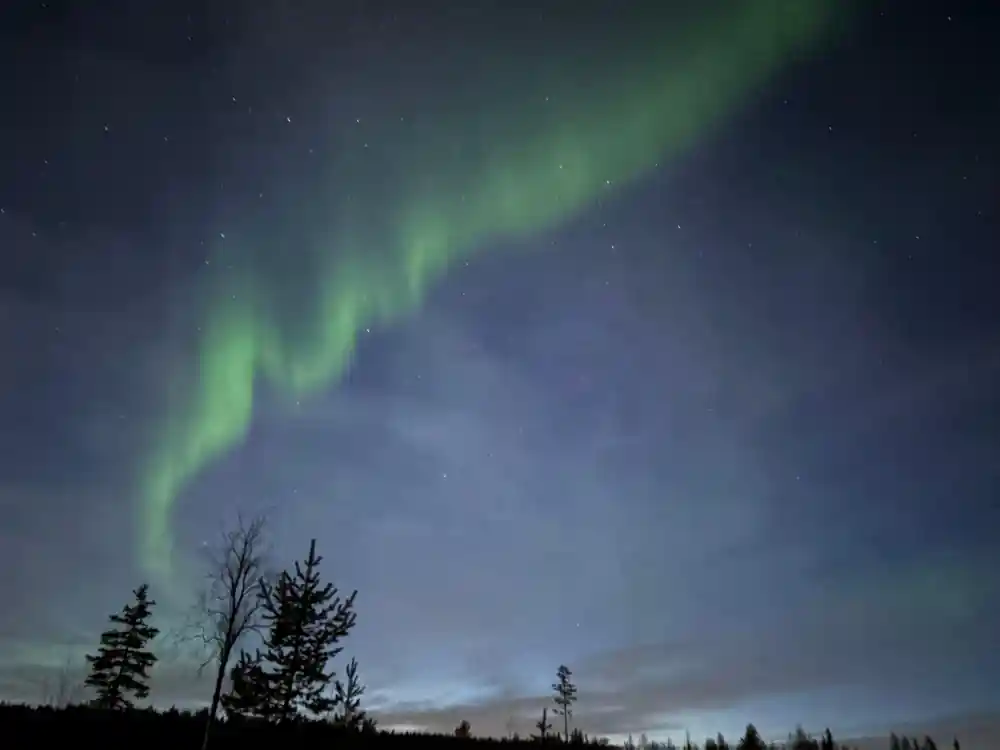
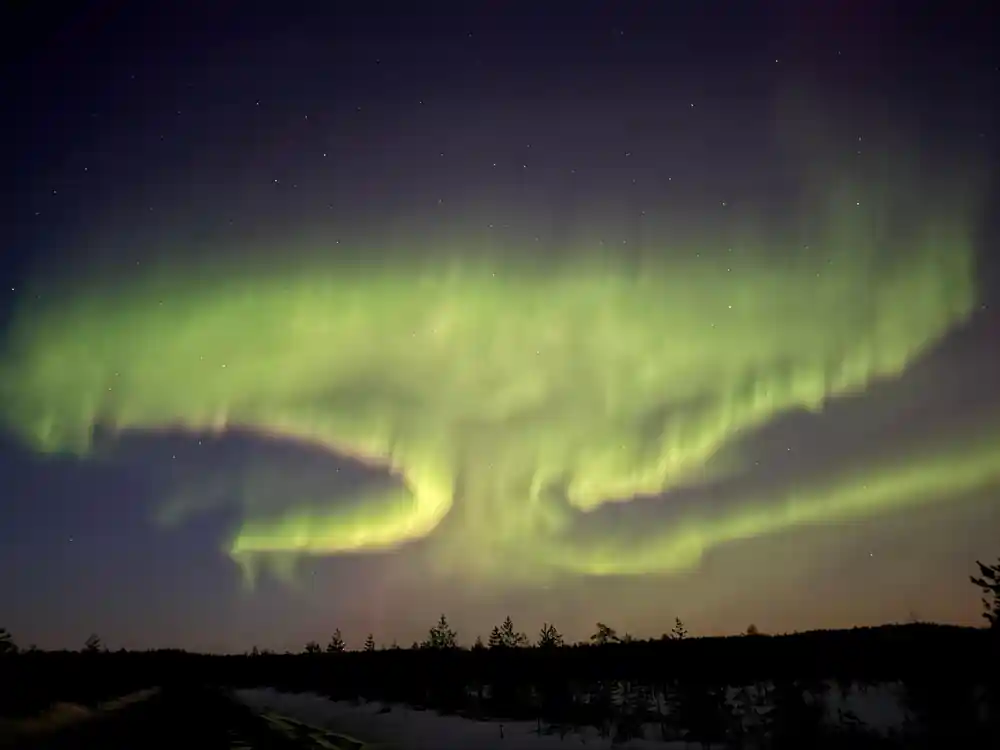
What happens next is physics you can watch. Fast-moving electrons collide with atoms and molecules in Earth's upper atmosphere above 100 km (60 miles), transferring energy that excites them to higher energy states.[10] The light that escapes is the aurora, and its colour depends on which gas is glowing and how high it sits: green from oxygen at 100-150 km, red from oxygen above 200 km, and violet from ionized nitrogen below 100 km.[11] Cameras pick up those tints more vividly than the eye does.
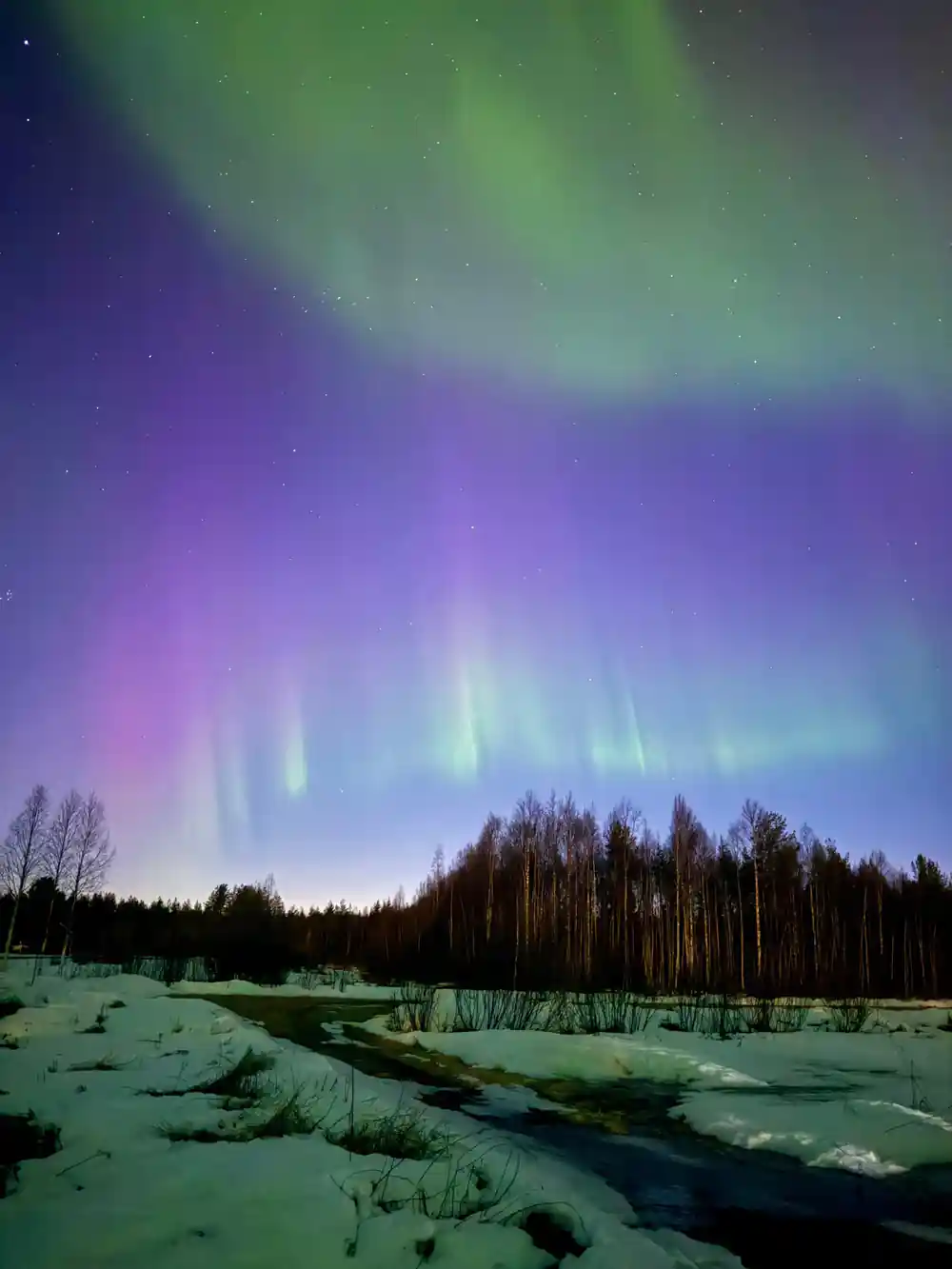
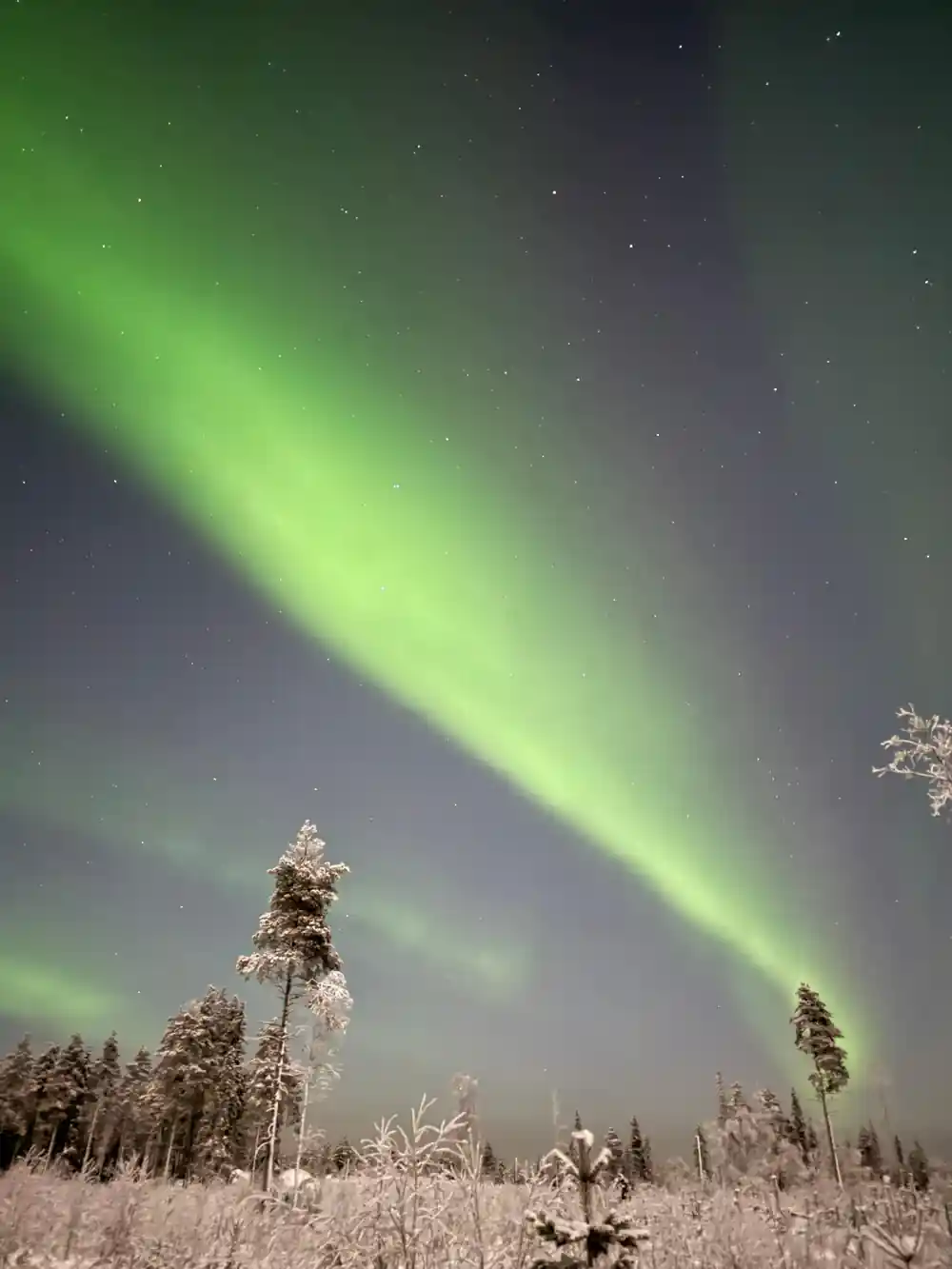
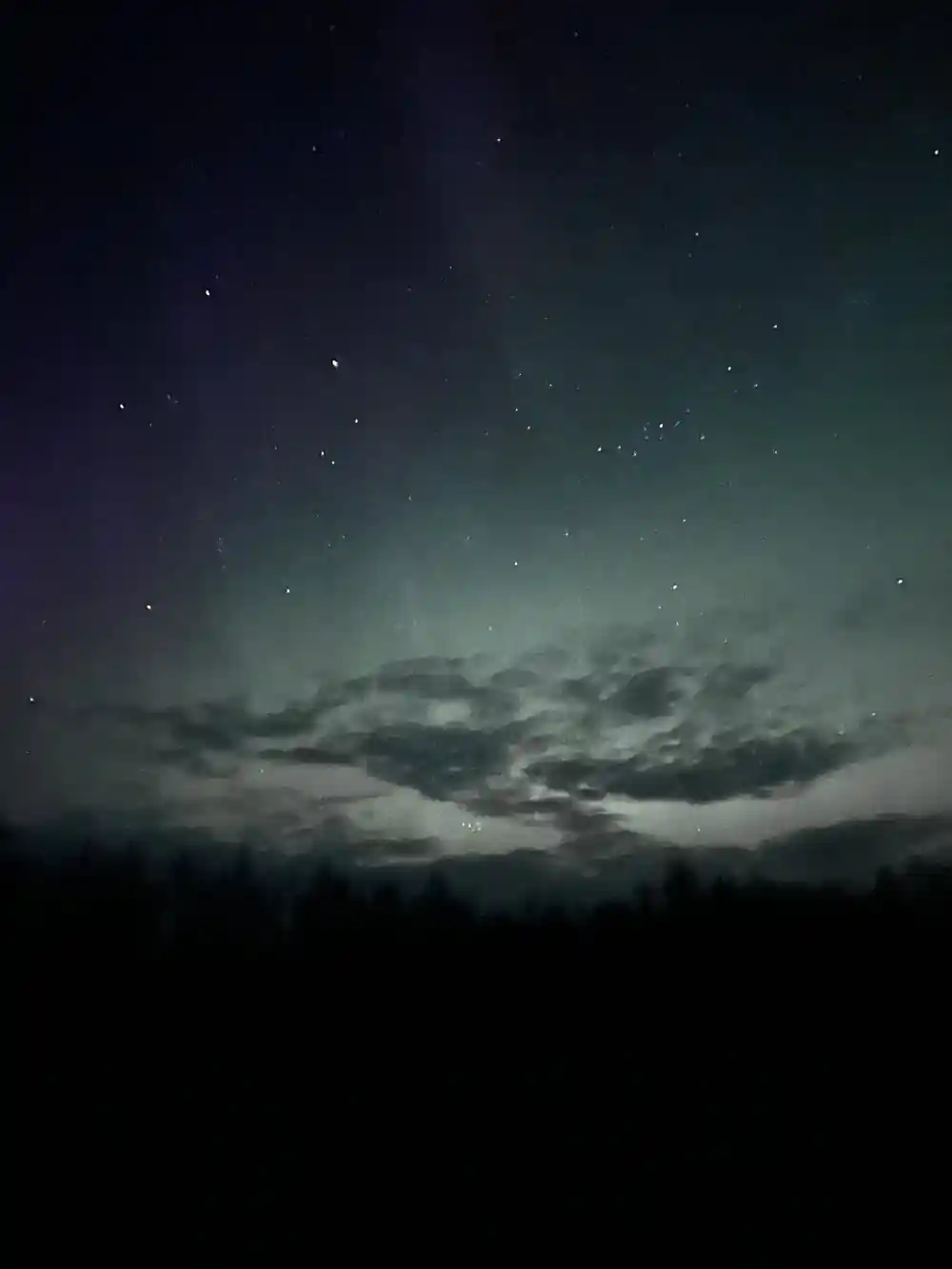
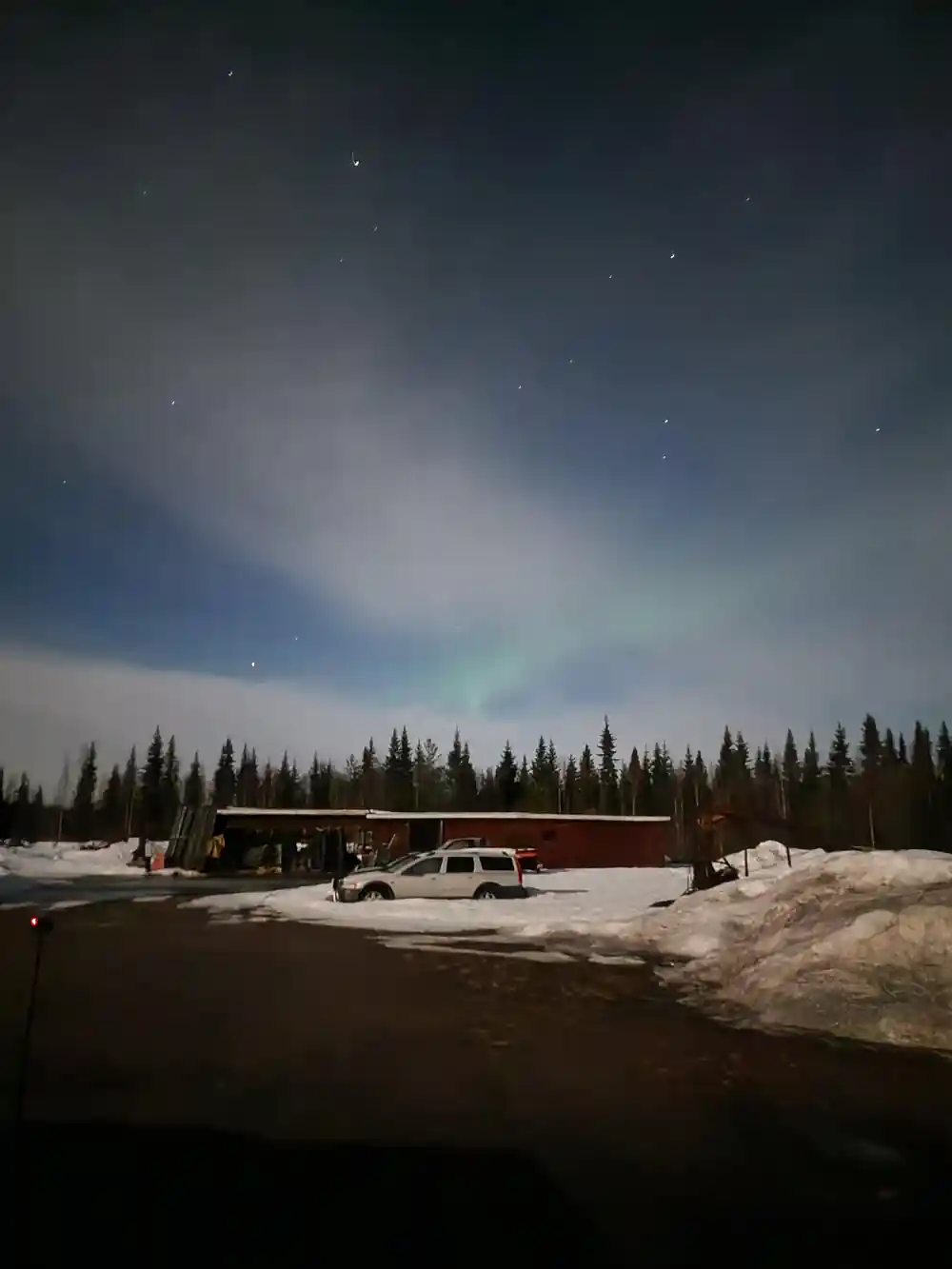
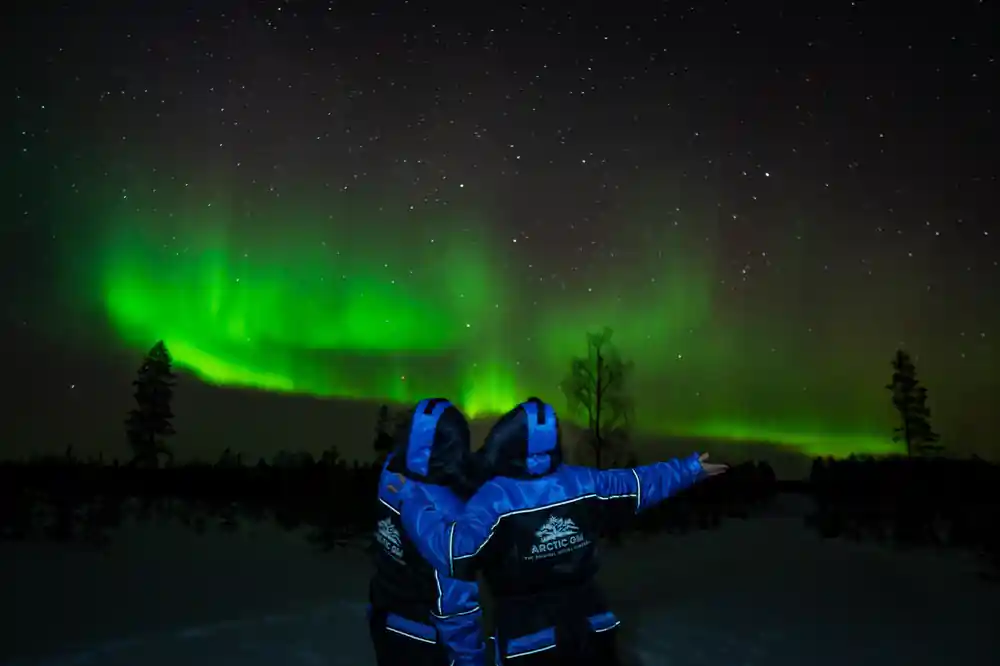
A green arc over the frozen forest north of Rovaniemi
Equinox Weeks and Prime Aurora Season
The equinox weeks are a favourite stretch for aurora travel in Lapland. They fall inside the local aurora season: visible aurora appears here roughly 8 months a year, from late August through mid-April.[2] You get real darkness at night and still enough daylight to see the country you are travelling through.
Many aurora chasers treat the equinox weeks as a favourite part of the season, though a quiet night is still a quiet night. When the Kp index sits in the range 0 to 2 the aurora will be far north, quite dim in intensity, and not very active.[8] On evenings like that, patience and a genuinely dark place matter more than any forecast.
Whatever the week, the routine is the same. Get out of the town lights, find an open horizon to the north, let your eyes adapt, and stop checking your phone. Dress for standing still in deep cold, because aurora watching is mostly waiting. Rovaniemi in January averages between -30 and -15 degrees Celsius, so treat the layers as essential kit.[4]
How Far South the Northern Lights Reach at Peak
People ask how far northern lights can be seen from a given place, and the honest answer is that it changes from night to night. During a strong disturbance the auroral oval widens and pushes toward the equator, so places that rarely see anything get a faint glow low on the northern horizon. During a weak one the oval sits tight around the far north and the lights stay where they usually are.
The Kp index ranges from 0 to 9, and for Kp in the range 0 to 2 the aurora will be far north, quite dim in intensity, and not very active.[8] Rovaniemi sits far enough north that visible aurora appears roughly 8 months a year, from late August through mid-April.[2] Several nights here gives you plenty of separate chances at a clear sky.
Now and then the sky offers something that is not an aurora at all. STEVE, short for Strong Thermal Emission Velocity Enhancement, is a narrow mauve ribbon far equatorward of the auroral oval, produced not by particle precipitation but by a ~5 km/s channel of westward-drifting ions heating the atmosphere.[12] It is one of the stranger rewards of a long night outside.
from US$228
The Northern Lights Tour with Guaranteed Sightings runs 8 hours and keeps groups to 8, with a full refund if viewing is impossible.[3]
Solar Maximum's Window and the Years Ahead
Solar scientists now believe that Solar Cycle 25, the one we are in right now, will have a double peak, extending the window for aurora activity well into 2026.[1] A double peak means the sun's activity does not simply crest and fade once. The window stays open longer, and that gives you more winters to choose from when you plan a trip north.
Those winters look the part as well. Rovaniemi typically receives 150-200 cm of snowfall per winter, and the snowy part of the winter can last 6-7 months.[13] Snow on the ground brightens the foreground in photographs and keeps the forest roads white rather than grey. Rovaniemi's polar night lasts for 2 days, and even outside those days the midwinter nights are long.[14]
Think in nights, not in one big evening. Weather in the north changes quickly and no forecast can promise a clear sky on a particular date, so a longer stay simply gives you more attempts. Sleep in the afternoon, eat early, and keep your evenings free for the drive out of town.
Reading Solar Activity Through Sunspots and Kp
Sunspots are the visible sign of the sun's tangled magnetic field. They look like dark freckles on the disc, and observers count them every day. A run of spotty days is a hint that eruptions are more likely and that more material may be heading our way, though the link between one sunspot group and one good aurora night is never a straight line.
The Kp index is the number most aurora apps quote. It ranges from 0 to 9, and for Kp in the range 0 to 2 the aurora will be far north, quite dim in intensity, and not very active.[8] Read it next to a cloud forecast, the moon phase and the time of night, because a clear, dark sky does as much for your chances as a busy sun.
A simple routine works well. Check the forecast in the morning and again after dinner, then trust your guide or your own eyes once you are outside. If the sky is clear, drive away from streetlights and give it an hour. Many flat evenings turn interesting after midnight, when the sky is at its darkest and most people have gone to bed.
Why These Winters Are Worth Planning For
The combination on offer right now is a good one. The extended window from the double peak reaches well into 2026,[1] and the local aurora season in Rovaniemi runs from late August through mid-April.[2] Add a snowy season that can last 6-7 months and you have a part of the world that looks like the postcards for much of the year.[13]
It is also busy. Rovaniemi recorded 1.2 million overnight stays in 2023, up 30% on 2022, with December peaks of up to 10,000 airport arrivals per day, and Santa Claus Village receives over 600,000 visitors a year.[7] If you want a specific hotel or a specific date near the holidays, book as early as you can.
The Northern Lights Tour with Guaranteed Sightings is the one to look at if you want the promise in writing: 8 hours, a small group limited to 8 participants, a live guide in English, and a full refund offered if conditions make viewing impossible.[3] It is rated 4.64 from 4,381 reviews.[3] Pickup is included, with details on check availability, and you can reserve now and pay later, with free cancellation up to 24 hours in advance.[3] It leaves the driving, the route choice and the hunt for clear sky to someone who does it night after night.
Aurora colours and the altitude they form at
Altitudes behind each colour of the glow: green from oxygen at 100-150 km, red from oxygen above 200 km, violet from ionized nitrogen below 100 km.[11]
Rovaniemi aurora tours, from-prices
All amounts are per-person from-prices in US dollars, taken from these GetYourGuide listings.[3][5][6][15]
When to plan your Rovaniemi aurora trip
How to plan an aurora trip
Pick your dates
Aim for the darker weeks between late August and mid-April, when visible aurora appears roughly 8 months a year.[2]
Read the forecast
Check the Kp index, the cloud cover and the moon before you commit to a long drive.
Dress for standing still
January in Rovaniemi averages between -30 and -15 degrees Celsius, so layers beat any single thick coat.[4]
Book the guarantee
The guaranteed sightings tour is limited to 8 participants and offers a full refund if conditions make viewing impossible.[3]
Keep one night free
Weather changes fast, so a spare evening gives you a second attempt at a clear sky.
Chase the aurora with a guaranteed sightings tour
from US$228Reserve now & pay later