In a nutshell
- Rovaniemi: Northern Lights Tour with Guaranteed Sightings, from US$228, rated 4.64 from 4,381 reviews.[1]
- Small group, limited to 8 participants, with a live tour guide in English.[1]
- 8 hours out, with pickup included and starting times shown when you check availability.[1]
- Guaranteed Northern Lights viewing, or a refund if conditions are impossible.[1]
- Aurora is visible over Rovaniemi for roughly 8 months a year, from late August through mid-April.[2]
- Top choice Guaranteed Sightings tour from US$228 Duration8 hours[1]Group sizeLimited to 8 participants[1]Rating4.64 from 4,381 reviews[1]GuideLive tour guide: English[1]CancellationCancel up to 24 hours in advance[1] Check availability
- Wilderness small group from US$148 Duration4 hours[3]Group sizePrivate or small groups available[3]Rating4.34 from 1,530 reviews[3]GuideLive tour guide: English[3]CancellationCancel up to 24 hours in advance[3] See this tour
- Aurora Hunt with photos from US$80 Duration5 to 8 hours[4]Group sizePrivate or small groups available[4]Rating4.85 from 1,296 reviews[4]GuideLive tour guide: English, Finnish, Spanish[4]CancellationCancel up to 24 hours in advance[4] See this tour
The short answer: Rovaniemi has visible aurora roughly 8 months a year, from late August through mid-April.
Our verdict: book the mobile hunt
On the night
Why the Hunt Moves: Reading the Sky Before You Leave
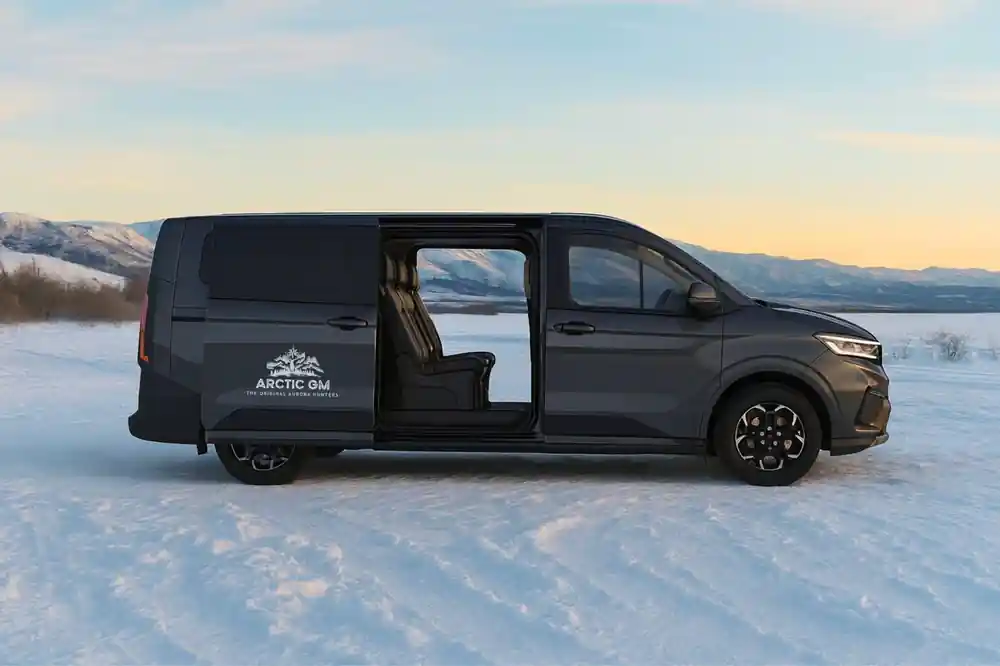
This is a northern lights safari Rovaniemi runs without a fixed camp and without a queue at one platform. The tour booked here lasts 8 hours and keeps the group small, limited to 8 participants.[1] Aurora is visible over Rovaniemi for roughly 8 months a year, from late August through mid-April.[2] A fixed platform is a gamble on one patch of sky, and a hunt is a bet spread across a whole region, with a van that can leave a cloudy car park behind and try somewhere else.
The science is simple enough to hold in your head at midnight. The lights begin when fast-moving electrons collide with atoms and molecules in Earth's upper atmosphere above 100 km (60 miles).[6] Each colour has its own altitude: green from oxygen at 100 to 150 km, red from oxygen above 200 km, and violet from ionized nitrogen below 100 km.[7] Guides also watch the Kp index, which ranges from 0 to 9, and at Kp 0 to 2 the aurora will be far north, quite dim and not very active.[8]
Solar Cycle 25 is expected to have a double peak, which will extend the window for aurora activity well into 2026.[9] Cloud is usually what decides a night rather than activity, so the van leaves early, checks a first site and rolls on towards the next lake or fell road if the horizon is socked in. Guides read the numbers, but they trust their own eyes and their own tyres more.
The Distance: How Far One Night Can Reach
The listing is built around unlimited mileage rather than one fixed clearing, and that changes the shape of the evening.[1] Rovaniemi sits on the Arctic Circle, and the towns near Rovaniemi sit along quiet roads where light pollution falls away fast. A night can start beside a lake, cross a frozen river and end on a forest track, all before the coffee in the flask runs out. Nothing is capped at a set distance, so a stubborn bank of cloud does not have to end the evening.
If your real question is, is northern lights in Norway a better bet, the aurora itself does not check passports. What changes is the weather and the driving time. Inland Lapland often gives cold, still, clear nights, while the coast can be milder and cloudier, and no guide controls either. What a mobile hunt can do is keep moving until it finds a gap, which is the practical argument for a long night rather than a short one.
Snow shapes the night more than people expect. Rovaniemi typically receives 150 to 200 cm of snowfall per winter, and the snowy part of the winter can last 6 to 7 months.[10] The Arctic Circle runs through Santa Claus Village, eight kilometres north of the city centre, and it is clearly marked there.[11] Ploughed roads keep the whole region within reach, and a driver who knows the area can judge which tracks are worth the detour.
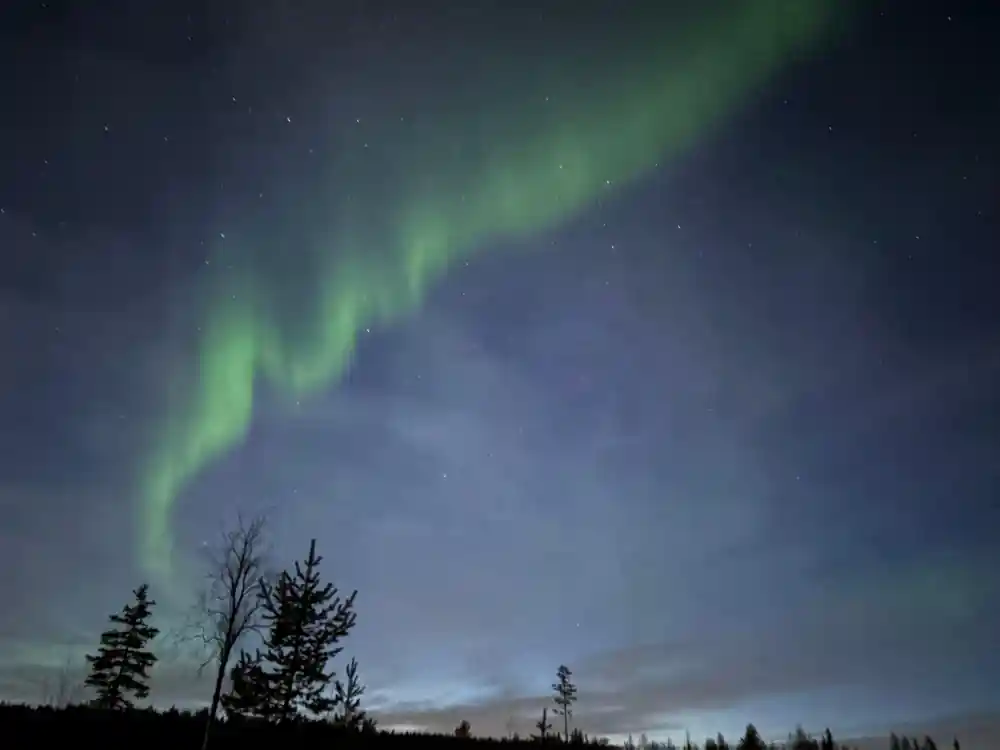
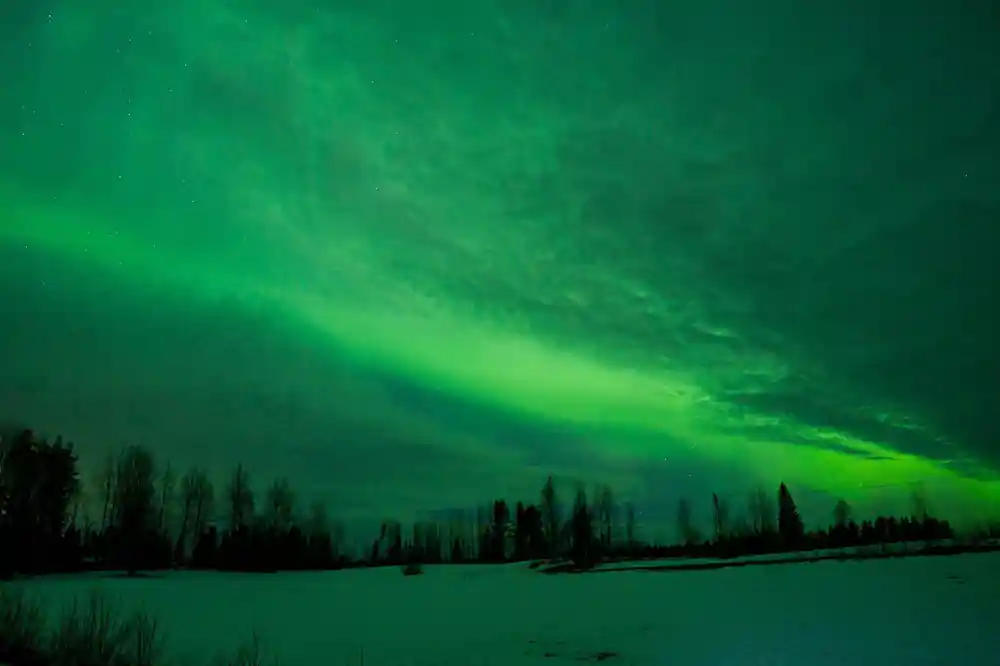
A frozen lake at midnight: the kind of stop a mobile hunt can make when the sky clears.
Choosing the Final Clearing: Why Small Numbers Matter
A group this small is a deliberate choice. The group is limited to 8 participants.[1] A handful of people fit around one guide, they can stand on a track without a wall of tripods, and a small van can take a turning that a coach would have to pass. When the sky finally moves, nobody is looking at the back of someone else's hood, and there is room to ask questions all night.
There is no single rovaniemi aurora viewpoint worth committing to in advance. The window worth standing in is the one the cloud has left open, and it might be a lake shore, a fell road or a field beside a frozen river. A still lake doubles the show, and fresh snow bounces light back up from the ground. Pickup is included, with details shown when you check availability, and the night runs 8 hours.[1] Ask your guide which direction gives the cleanest horizon.
The Waiting Hours: What Happens in the Dark
January in Rovaniemi averages between -30 and -15 degrees Celsius, which is ordinary winter weather there rather than an emergency.[5] A thermal suit rated to minus 40 keeps you warm while your base layer stays dry, and damp cotton next to the skin defeats any amount of insulation over the top.[12] Merino or synthetic first, fleece next, then the suit, and boots with room for two pairs of socks rather than one tight pair.
Much of a hunt is waiting, and good waiting is comfortable. You sit on a reindeer hide, you hold something hot, you look up every few minutes. Eyes need time in the dark before they see faint detail, so keep phone screens and torches pointed at the ground. The polar night lasts 2 days in Rovaniemi, and even then the sky tends to hold a long blue dusk rather than true black.[13] Bring your own flask if you are particular about coffee.
from US$228
Eight hours out, a group limited to 8 participants and a viewing guarantee: or a refund if conditions are impossible.[1]
The First Appearance: What a Handful of Eyes See Together
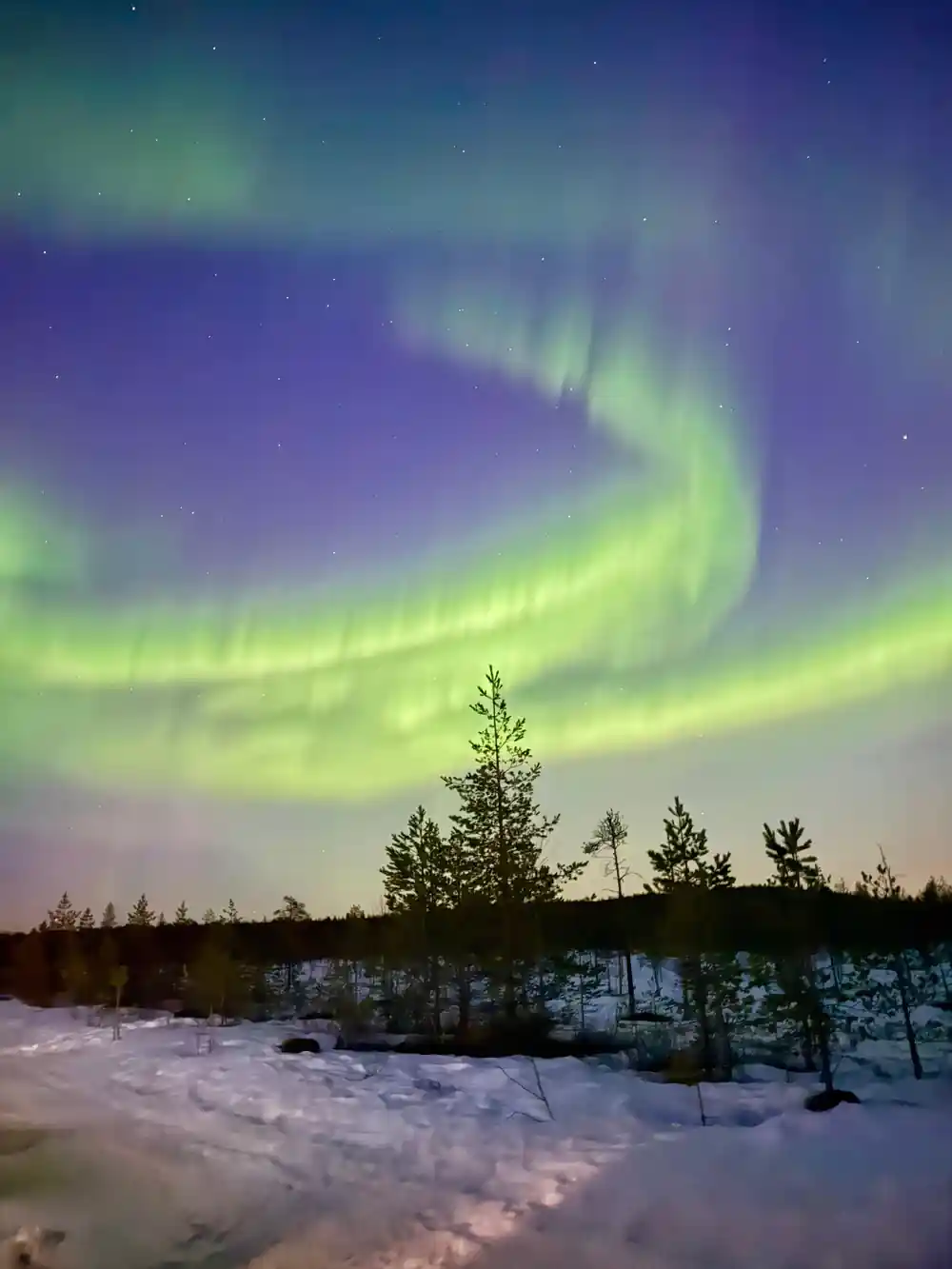
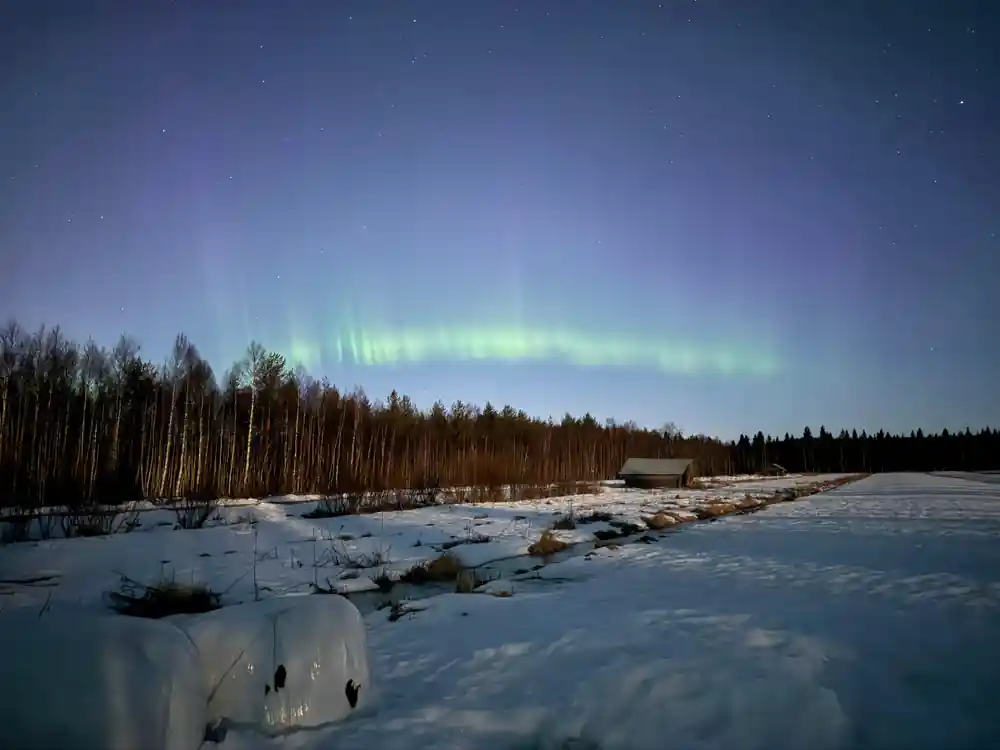
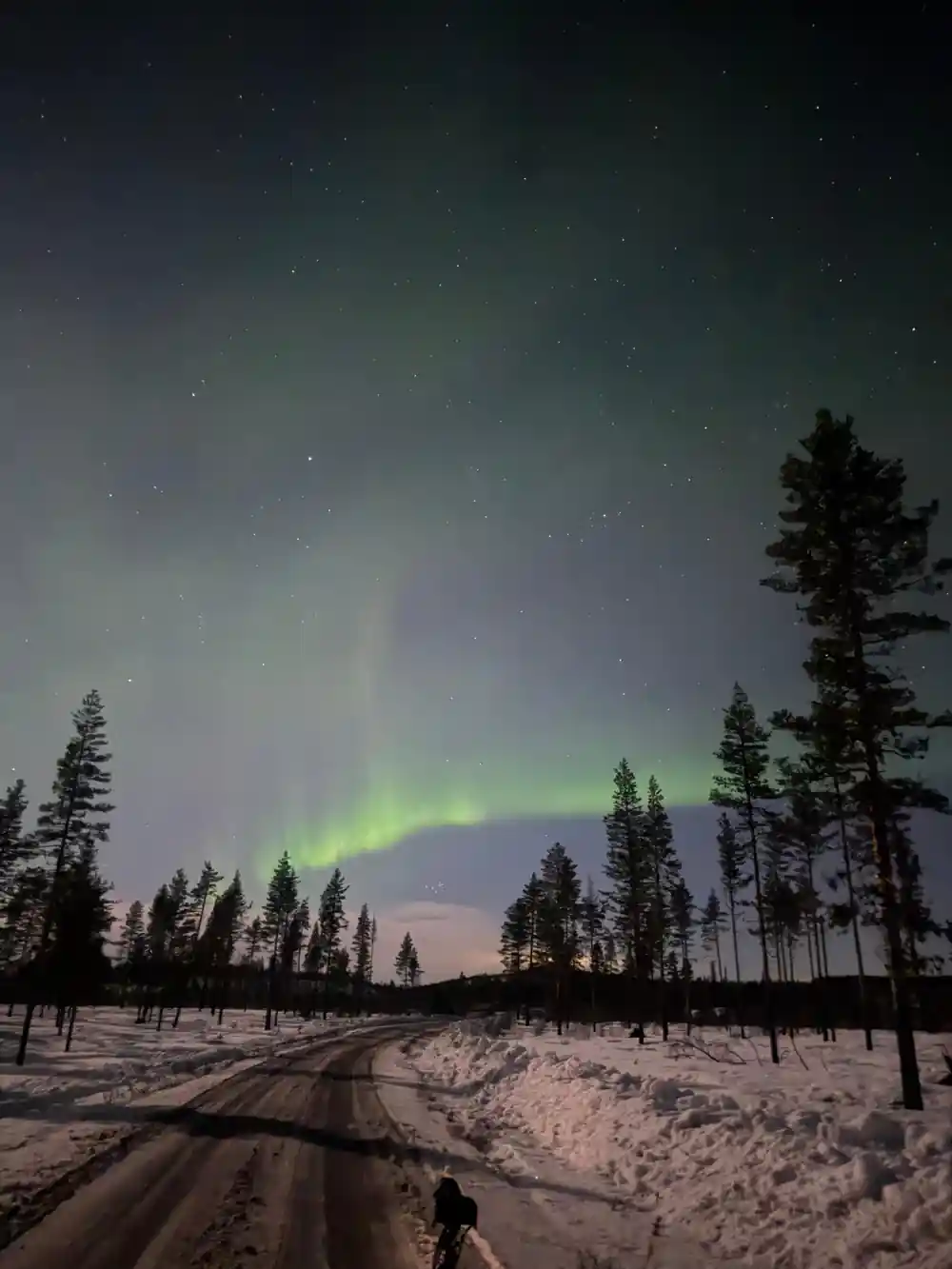
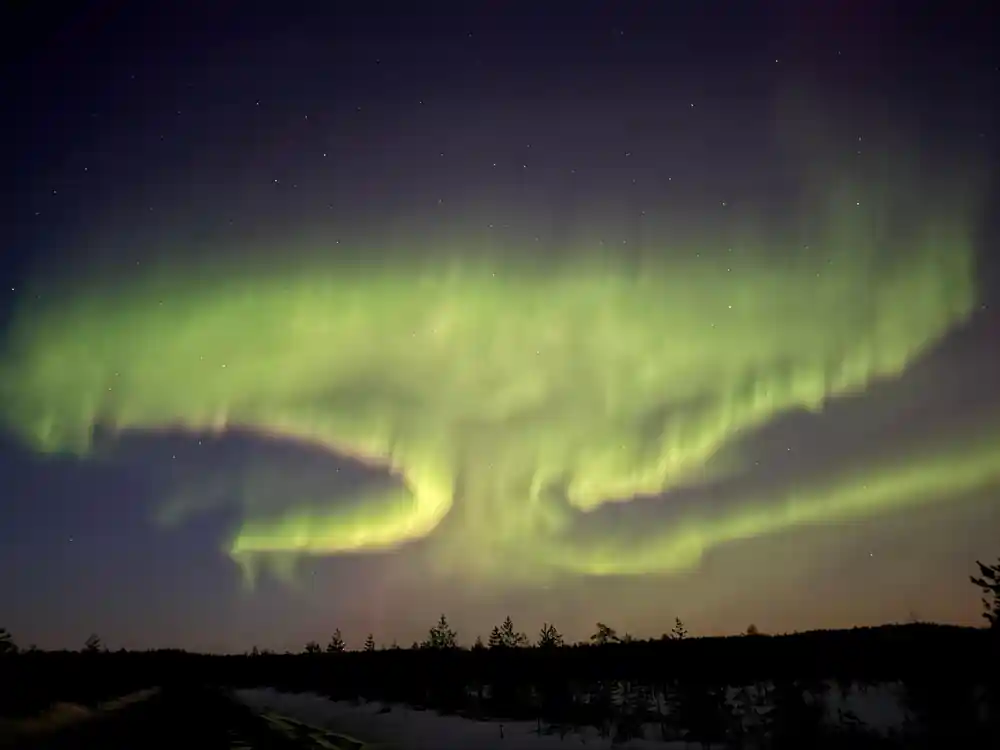
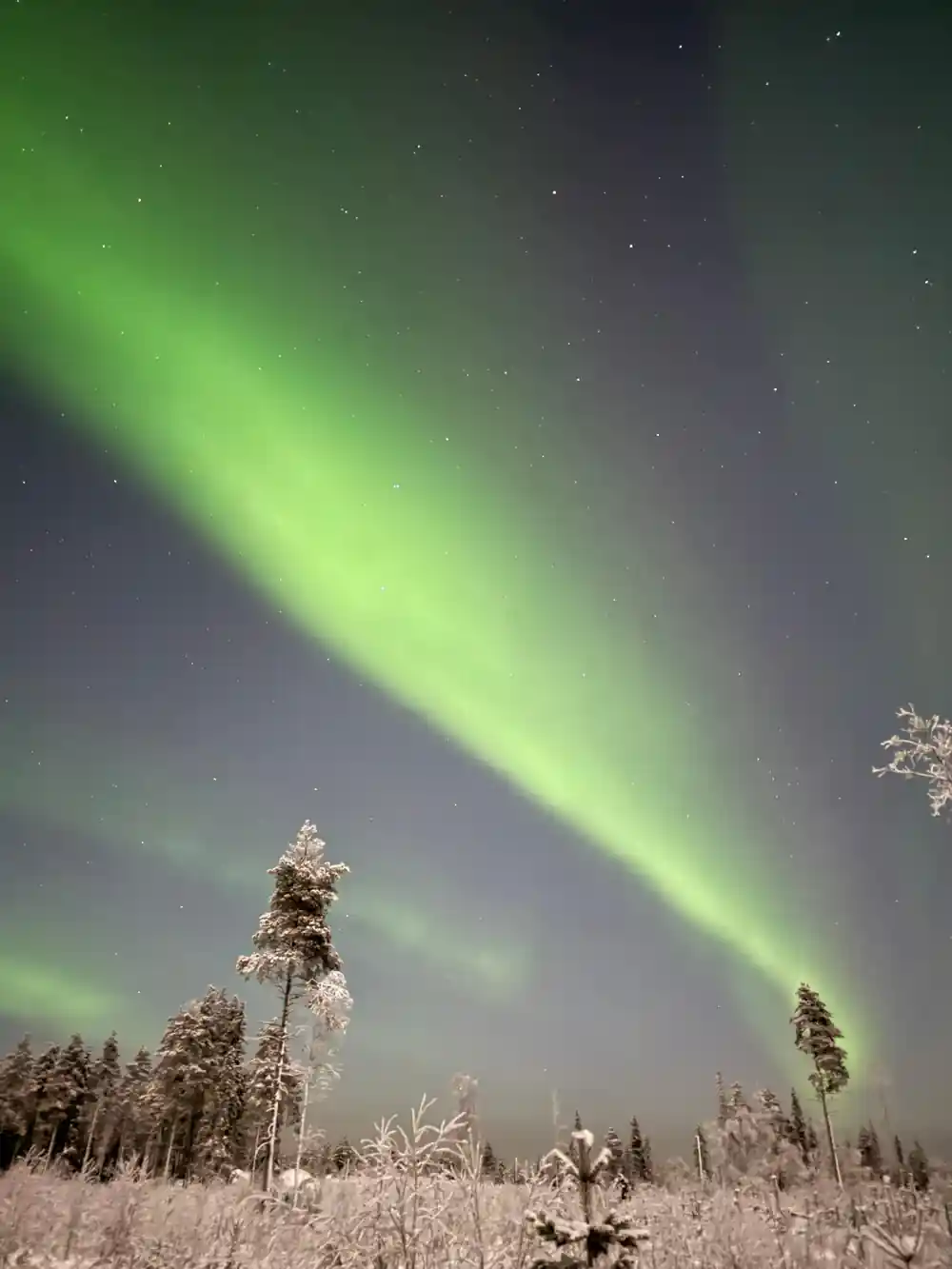
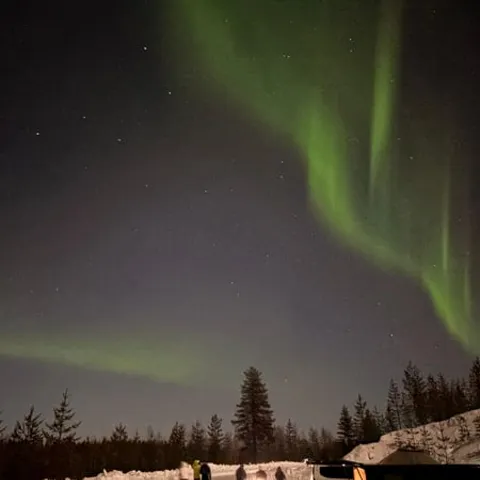
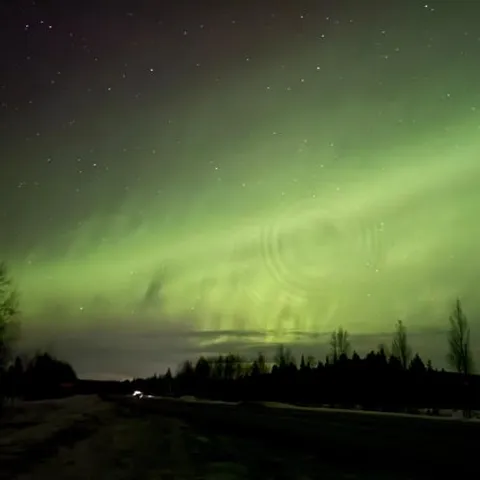
The aurora rarely arrives as a curtain. It starts as a pale grey smudge above the treeline that slowly picks up a green edge, and green comes from oxygen at 100 to 150 km up.[7] Quiet nights are still nights worth standing in the snow for: at Kp 0 to 2 the aurora will be far north, quite dim and not very active, and Rovaniemi is far north.[8] Finnish calls the lights revontulet, literally fox fires, and a Sami legend says a magical fox running across the Arctic fells causes them.[14]
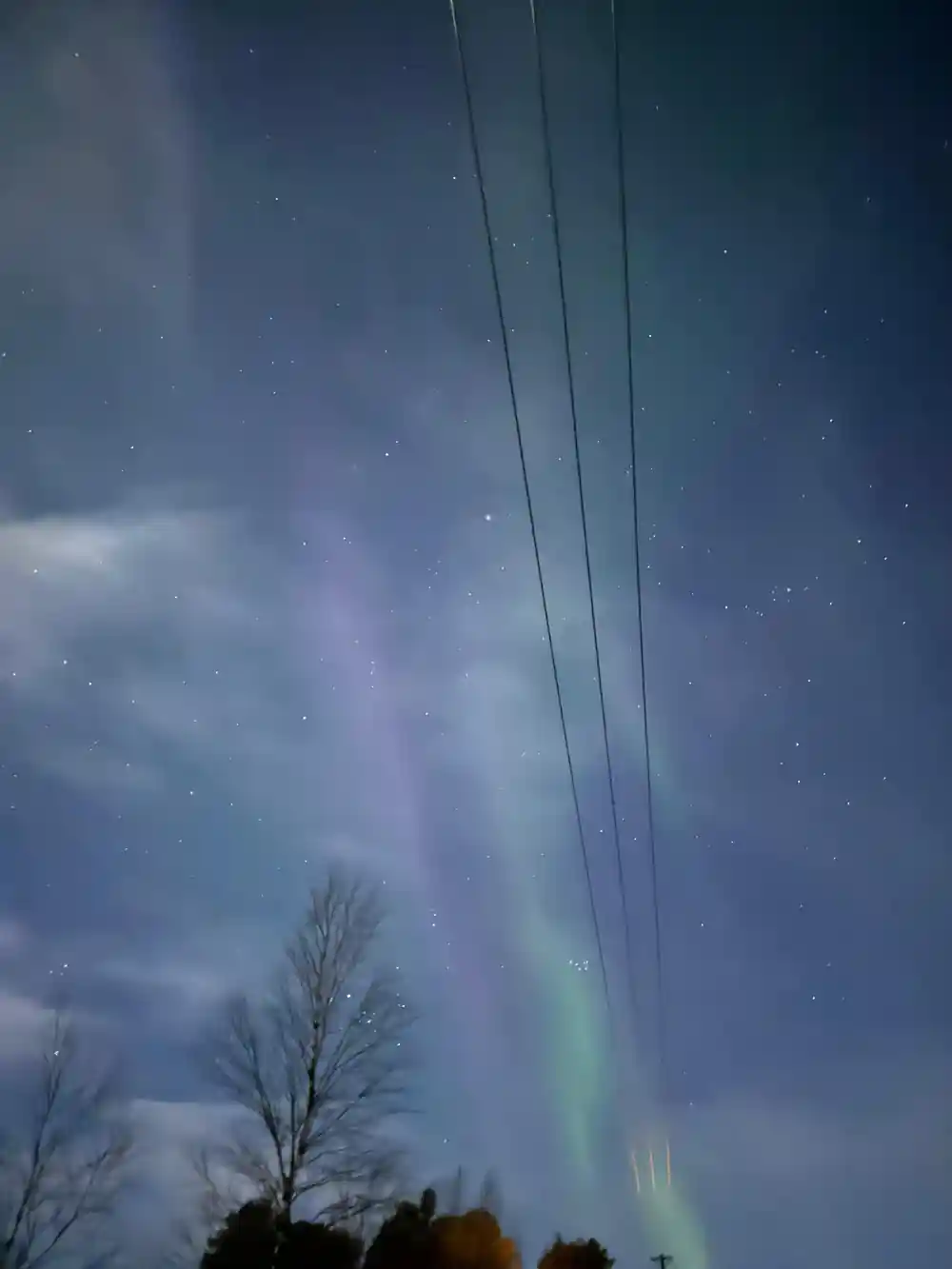
Now and then the sky offers something stranger. STEVE is a narrow mauve ribbon far equatorward of the auroral oval, produced by a 5 km/s channel of westward-drifting ions heating the atmosphere rather than by particle precipitation.[15] A small group also means more of the sky is being watched, and red oxygen glow above 200 km can pass for thin cloud until someone points at it.[7] Look slightly to the side of a faint band: peripheral vision picks up dim light better than the centre of your gaze.
The Camera Versus Your Memory: Photos and Memory
A camera sees more than your eyes do. A long exposure keeps gathering light for seconds, so a sky that looks pale grey to you can come out green and full of structure on the screen, while a hurried phone snap can come out as nothing at all. Bring a small tripod, a spare battery kept warm in an inside pocket and a lens wide enough for the whole sky. Shoot short bursts rather than one endless frame.
If you only have a phone, rest it on something steady, switch to night mode and let it think for a few seconds. You have 8 hours out there, which is time for both looking and shooting.[1] A live tour guide in English travels with the group.[1] Ask where to stand and how to set the exposure, then put the camera down for a while and watch the thing you came for. Memory keeps the rest.
Certainty in an Uncertain Sky: The Guarantee Explained
The promise on this listing is direct: guaranteed Northern Lights viewing, or a refund if conditions are impossible.[1] Free cancellation runs up to 24 hours in advance for a full refund, and you can reserve now and pay later.[1] Treat the guarantee as a fair deal rather than a magic trick: nobody sells clear skies. When the cloud closes in for good, a refund is the honest ending to the night.
What a hunt can do is keep searching while there is still a road to try, and the season gives you a long runway. Aurora is visible over Rovaniemi for roughly 8 months a year, from late August through mid-April.[2] A small group, a long night, a warm suit and a driver who would rather move than give up: that is an aurora hunting tour Rovaniemi style. The tour booked here costs from US$228 and is rated 4.64 from 4,381 reviews.[1]
Where Each Aurora Colour Forms
Altitudes from[7]: green from oxygen at 100 to 150 km, red from oxygen above 200 km, violet from ionized nitrogen below 100 km.
What a night hunt costs from Rovaniemi
When to go: the aurora year in Rovaniemi
How the night unfolds
Check the forecast
Before pickup the team reads cloud cover and the Kp index, which ranges from 0 to 9.[8]
Pickup in Rovaniemi
Pickup is included, with details shown when you check availability.[1]
Drive for clear sky
The van can pass the Arctic Circle mark at Santa Claus Village, eight kilometres north of the city centre, and keep going.[11]
Suit up
A suit rated to minus 40 holds the cold off while your base layer stays dry, so leave damp cotton at home.[12]
Watch and wait
Green light comes from oxygen 100 to 150 km up, and eyes need time in the dark before they see faint detail.[7]
Home after 8 hours
The night runs 8 hours, with starting times shown when you check availability.[1]
Book the eight-hour hunt with the viewing guarantee
from US$228Reserve now & pay later