In a nutshell
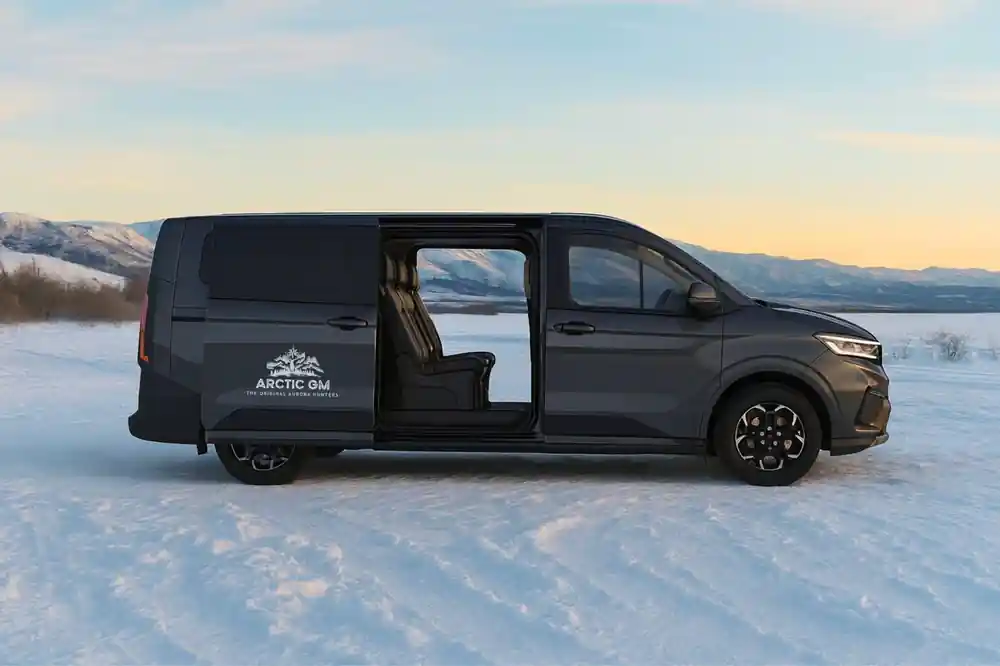
- On an aurora night the van is not just transport. The tour booked from this site runs for 8 hours, and the cabin is somewhere to thaw fingers and compare photos between stops.[1]
- Small group: limited to 8 participants, so there is room to move, a window for everyone and a guide who can answer questions properly.[1]
- The listing offers a full refund if conditions make northern lights viewing impossible, and free cancellation up to 24 hours in advance.[1]
- From US$228, rated 4.64 from 4,381 reviews, with pickup included and a live English-speaking guide.[1]
- An Arctic thermal suit rated to minus 40 still fails over damp cotton, so pack a wool or synthetic base layer you can strip off in the heat.[2]
- Top choice Guaranteed Sightings from US$228 Duration8 hours[1]Group sizeLimited to 8 participants[1]Guide languageEnglish[1]Rating4.64 from 4,381 reviews[1]CancellationCancel up to 24 hours in advance[1] Check availability
- Wilderness Small Group from US$148 Duration4 hours[3]Group sizePrivate or small groups available[3]Guide languageEnglish[3]Rating4.34 from 1,530 reviews[3]CancellationCancel up to 24 hours in advance[3] See this tour
- Aurora Hunt with Photos from US$80 Duration5 - 8 hours[4]Group sizePrivate or small groups available[4]Guide languageEnglish, Finnish, Spanish[4]Rating4.85 from 1,296 reviews[4]CancellationCancel up to 24 hours in advance[4] See this tour
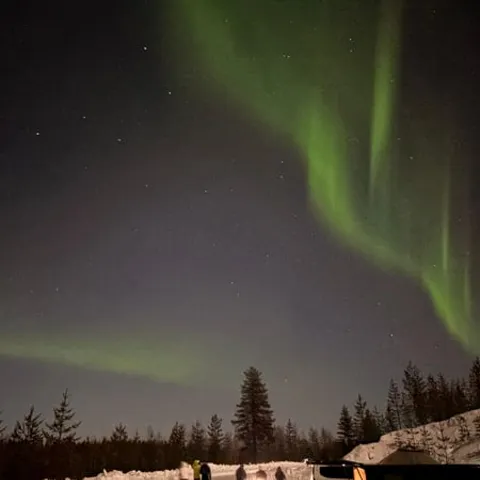
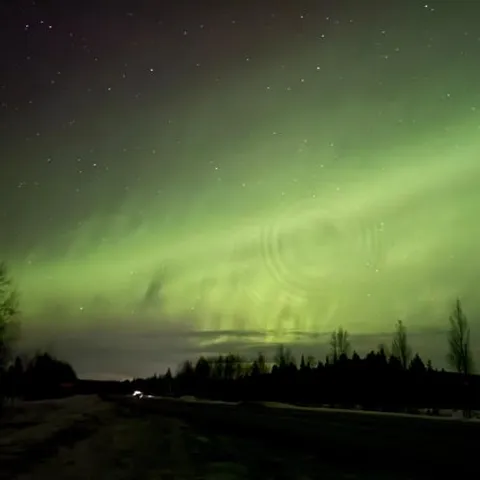
Get them wrong, in cotton, and you will be cold in a suit rated to minus 40, because damp cotton against skin defeats any amount of insulation over the top.
Is a night in the aurora van worth it?
Read before booking
- Tell the operator about mobility needs, young children or car sickness when you book.
- Ask what winter tyres, spare wheels and recovery kit the van carries.
- Check the cancellation window before you pay.
- Compare from-prices across several similar aurora tours.
On the night
- Wear a wool or synthetic base layer, fleece and a windproof outer layer.
- Belt on before the wheels turn, and keep bags stowed in the footwell.
- Expect long seated stretches between stops; bring water and snacks.
- Speak up if you are cold, unwell or need a break.
Studded tyres and four-wheel drive on Arctic ice
Winter roads around Rovaniemi are packed snow and polished ice rather than bare tarmac, and the vehicles that cope best are the ones built for it. Studded tyres bite into the surface, four-wheel drive keeps the front and rear working together, and decent ground clearance stops the underside ploughing through drifts. Ploughs run through the night, and snow can fall again within hours. Rovaniemi typically receives between 150 and 200 cm of snowfall per winter.[5]
In deep winter the cold itself changes how a road behaves. January temperatures in Rovaniemi sit between -30 and -15 degrees Celsius on average, and at those readings tyre rubber hardens and braking distances stretch.[6] A good driver leaves a long gap, steers with small inputs and avoids sudden moves on bends. As a passenger you help most by staying calm and letting the driver concentrate: no sudden questions at a junction, no leaning across the cabin to point at something, no grabbing at the door handle. If you are prone to car sickness, say so at the start of the evening so you can be seated where the motion is gentlest.
The heated cabin as your base between aurora stops
An aurora hunt is not one long drive to a single viewpoint. It is a series of short waits in the dark with warm spells in between, and the van is what makes that bearable. In Finnish the lights are revontulet, literally fox fires, after a Sami legend of a magical fox running across the Arctic fells.[7] The tour booked from this site runs for 8 hours, with pickup included and a live guide in English, so the vehicle becomes your base for most of the night.[1]
Layering matters more than any single garment. An insulated thermal suit used for Arctic activities can be rated to minus 40, but a damp cotton base layer defeats its insulation.[2] Start with wool or a synthetic layer that wicks, add fleece, then the outer suit. The trick in the van is to strip the outer layer off before you overheat. Sitting in a heated cabin in a full snowsuit leaves you clammy, and clammy is exactly what makes the next stop feel freezing. Keep a dry hat and gloves in a bag and swap them when you climb back in.
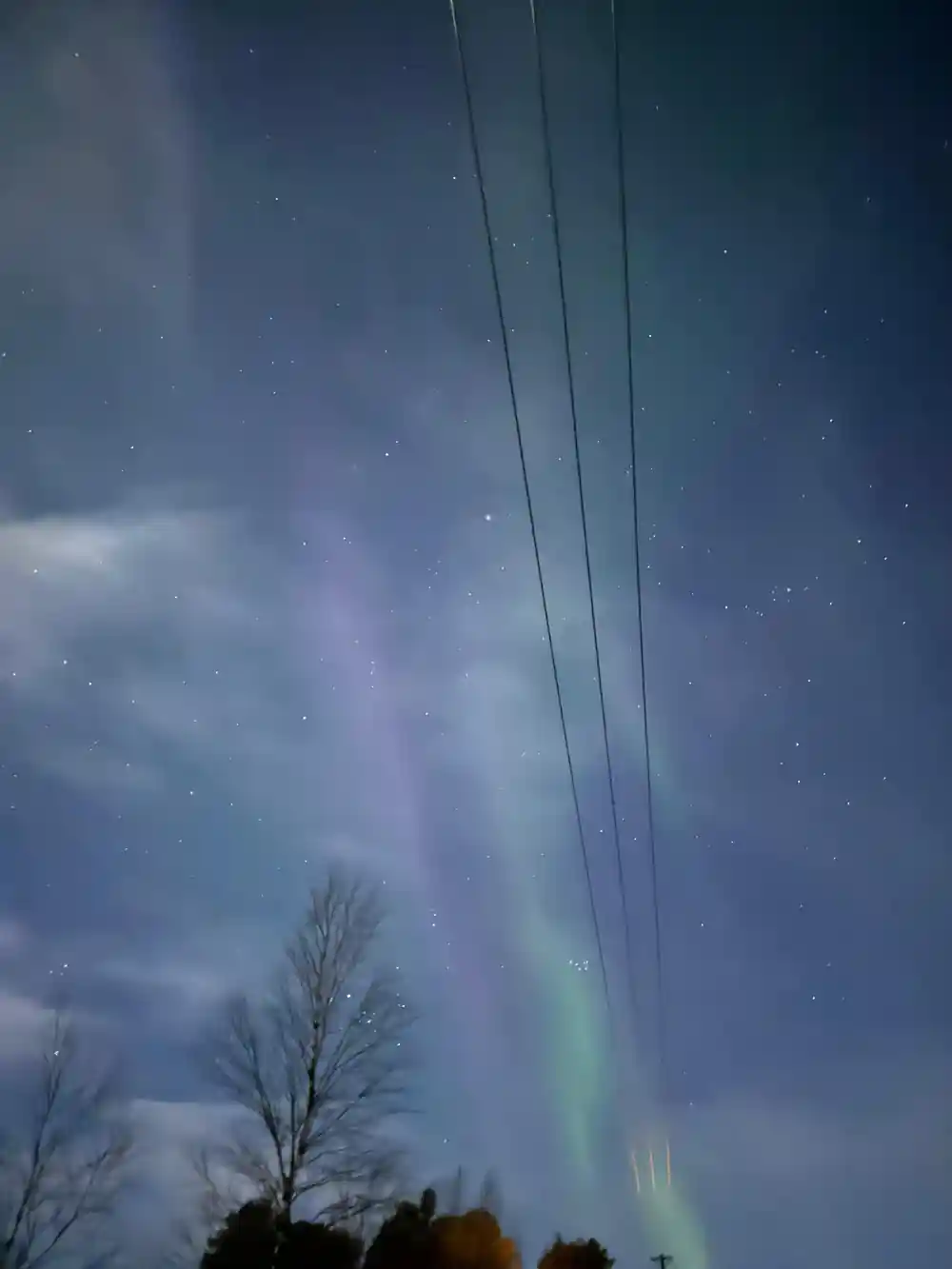
A van parked on a frozen forest road, waiting for a gap in the cloud.
Breakdown and recovery far from town
Aurora hunting pushes away from streetlights, and that means forest roads, logging tracks and frozen lake access points. Phone signal can be patchy, help can be an hour or more away, and a puncture at minus twenty is a different job from one in a town centre. Operators who work these roads seriously tend to run vehicles in pairs, carry a spare wheel, a compressor, jump leads, tow straps, shovels and a proper torch, and keep a phone or satellite messenger charged. It is fair to ask how a company handles this before you book.
On the commercial side, the listing for the tour booked from this site offers a full refund if conditions make viewing impossible, free cancellation up to 24 hours in advance, and the option to reserve now and pay later.[1] Shorter alternatives exist if a long night in a van does not appeal. The small-group wilderness tour runs 4 hours from US$148, and the Aurora Hunt with free photos runs 5 to 8 hours from US$80.[3][4] None of that replaces a well-prepared driver, but it does mean a washed-out night does not have to cost you the full price.
First-aid certification for guides working in isolation
Hours from a hospital, with a group standing in the snow, is not a place to improvise. Ask what first-aid training the guide holds and how recently it was refreshed, whether the vehicle carries a winter first-aid kit and a foil blanket, and what the plan is if someone twists an ankle on ice or a passenger feels unwell far from town. Good operators answer these questions without flinching, and the answers tell you a lot about how the whole evening is run.
It also helps to know who is leading. The tour booked from this site has a live tour guide in English and is limited to 8 participants, which keeps the guide's attention spread across a small group.[1] Pickup is included, and the listing asks you to check availability for details, so confirm your meeting point when you book rather than assuming a hotel door pickup.[1] Tell the guide about any medical condition, medication or allergy before the van leaves, and mention if anyone in your party struggles with cold hands or feet.
from US$228
Northern Lights Tour with Guaranteed Sightings, small groups of 8, and a full refund if conditions make viewing impossible.[1]
Seatbelts, child seats and passenger safety
Belts go on before the wheels move, every time, even on a short hop between stops. Passengers in the back of a van can be tempted to unclip early to pull on a hat or reach for a camera bag; wait until the van has stopped. Ice makes every journey unpredictable, and a loose bag becomes a missile in a slide. Keep cameras, tripods and thermos flasks stowed under the seat or in the footwell, and keep the aisle clear so people can get out quickly at a stop.
Families should ask about child seats and boosters when they book; the answer depends on the vehicle and the ages of the children. Smaller groups make it easier. The tour booked from this site is limited to 8 participants, and the family-friendly northern lights tour is also limited to 8, from US$121.[1][8] If you are travelling with a baby or a toddler, say so at booking and ask exactly what restraint will be provided, then check it fits before you set off, in the way you would with any taxi or hire car.
Reindeer and moose on winter roads after dark
Reindeer are not wildlife you admire from a safe distance. They stand on the road, lick salt from the surface and wander off at their own pace. There were 186,776 reindeer in Finland in the reindeer husbandry year 2013-14.[9] They show up as a pale shape or a pair of drifting eyes in the headlights. Drivers slow right down, dip the lights and give them room. Moose are taller, darker and heavier, and are hardest to pick out against a dark treeline.
Passengers can genuinely help here. Two extra pairs of eyes scanning the verges at low speed beat one driver squinting alone, so call out shapes early rather than at the last second. Beyond animals, watch for the practical stuff: pull-ins half buried in snow, snowmobile tracks crossing the road, and the glare of an oncoming plough. None of it is dramatic, and good guides make it look easy, which is exactly the point. If wildlife is the draw, a reindeer farm visit can fill an afternoon without eating into the aurora hours.
How much time you actually spend seated
Expect to spend most of an aurora night in the van. The tour booked from this site runs for 8 hours, and the listing asks you to check availability for starting times.[1] Hunting often means driving for an hour or more, waiting, driving again and waiting again. Cloud can sit over one valley while the next is clear. The Arctic Circle runs through Santa Claus Village, eight kilometres north of the city centre, and is clearly marked there.[10] If long car journeys do not suit you, choose a shorter format: the small-group wilderness tour runs 4 hours from US$148, and the snowmobile safari runs 4 hours from US$160.[3][11]
Timing decides how much you see. Aurora is visible in Rovaniemi for roughly 8 months a year, from late August through mid-April, and geomagnetic activity decides the rest.[12] The Kp index ranges from 0 to 9, and for Kp 0 to 2 the aurora will be far north, quite dim and not very active.[13] Solar Cycle 25 is expected to have a double peak, which will extend the window for aurora activity well into 2026.[14] The light itself forms above 100 km (60 miles) up, where fast-moving electrons collide with atoms and molecules in the upper atmosphere.[15] Pack water, snacks, any medication you need, a charged power bank and a neck pillow. It is a long, cold, wonderful shift.
How long the polar night lasts
Polar night duration in days for Rovaniemi, Ylläs and Utsjoki.[16]
Aurora tours by van and vehicle
US dollar from-prices of three Rovaniemi aurora listings.[1][3][4] Each listing publishes a single from-price, so the same figure appears in both columns.
When aurora nights happen in Rovaniemi
On the road at night
Check the vehicle
Ask about studded tyres, four-wheel drive, spare wheels and recovery kit before the evening starts.
Belt up first
Belts on before the wheels move, bags stowed, and no unclipping to reach for a camera between stops.
Layer for both worlds
Wool or synthetic base layer under the suit, and a dry hat and gloves ready for the cold stops.
Watch the verges
Reindeer and moose stand on winter roads after dark; call out shapes early and let the driver slow down.
Speak up
Say if you are cold, queasy or need a break; guides plan stops around the group, not the clock.
Ready for a night in the aurora van?
from US$228Reserve now & pay later