In a nutshell
- Aurora is visible in Rovaniemi roughly 8 months a year, from late August through mid-April.[1]
- The polar night lasts 2 days here, and January averages between -30 and -15 degrees Celsius.[2][3]
- Rovaniemi typically receives 150-200 cm of snowfall per winter, and the snowy season can run long.[4]
- Solar Cycle 25 is expected to have a double peak, extending aurora activity well into 2026.[5]
- The guaranteed tour runs for 8 hours, is limited to 8 participants and starts from US$228.[6]
- Top choice Guaranteed Sightings Tour from US$228 Duration8 hours[6]Rating4.64 from 4,381 reviews[6]Guide languageLive guide in English[6]Free cancellationCancel up to 24 hours in advance[6] Check availability
- Aurora Hunt with Photos from US$80 Duration5 - 8 hours[7]Rating4.85 from 1,296 reviews[7]Guide languageEnglish, Finnish, Spanish[7]Free cancellationCancel up to 24 hours in advance[7] See this tour
- Aurora Snowmobile Safari from US$160 Duration4 hours[8]Rating4.33 from 1,135 reviews[8]Guide languageLive guide in English[8]Free cancellationCancel up to 24 hours in advance[8] See this tour
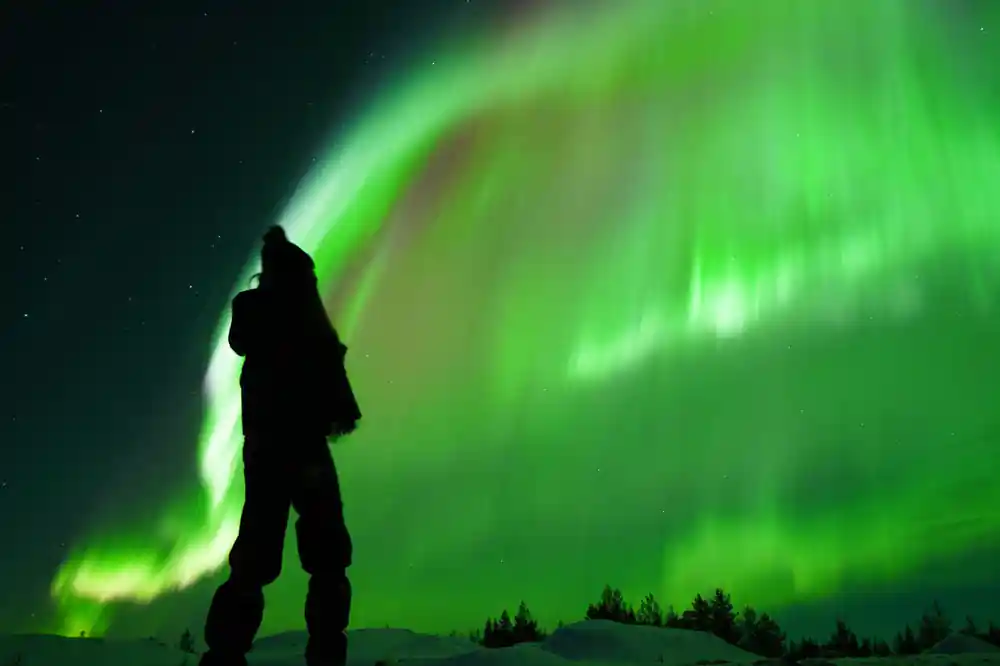
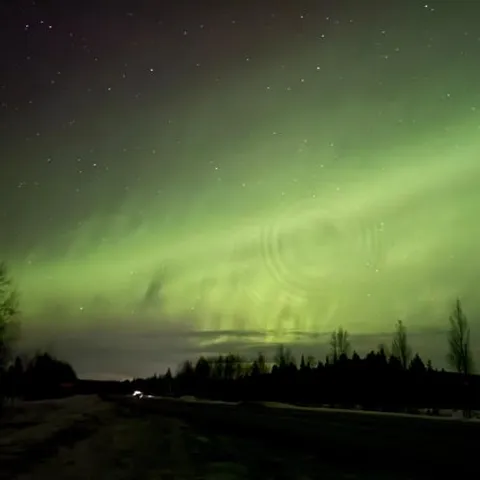
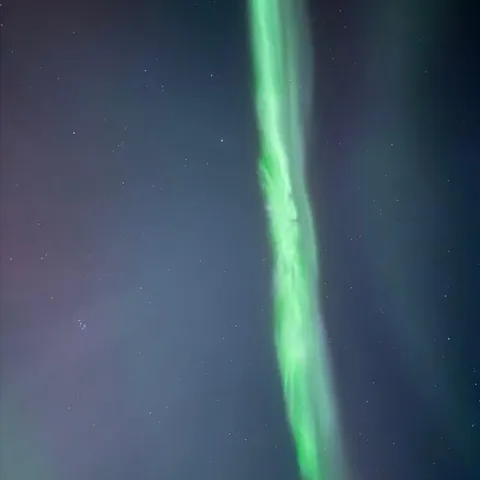
The short answer: Rovaniemi has visible aurora roughly 8 months a year, from late August through mid-April.
Verdict: book for the long window, not one lucky night
Read before booking
Aurora season in Rovaniemi: when the lights run
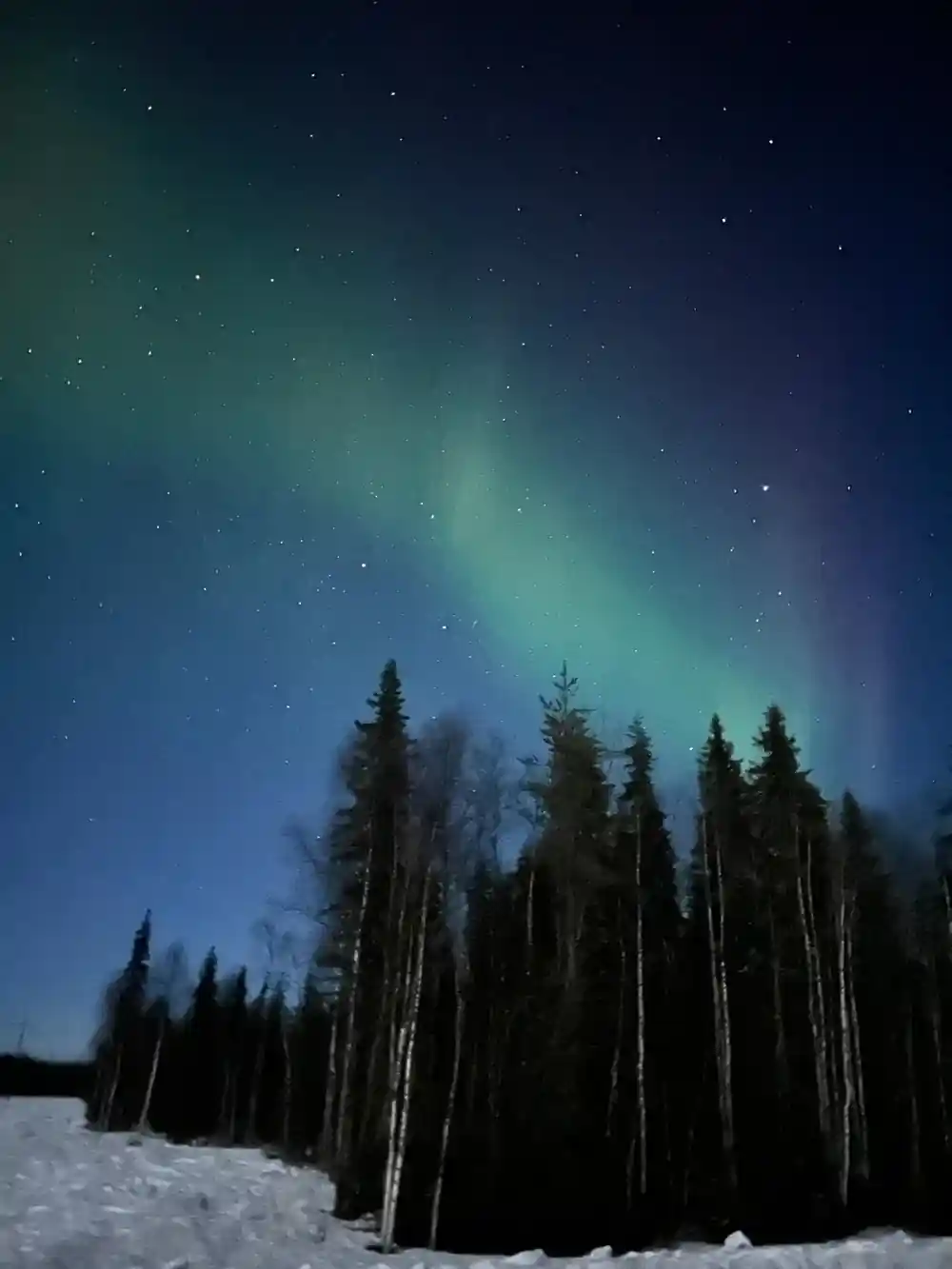
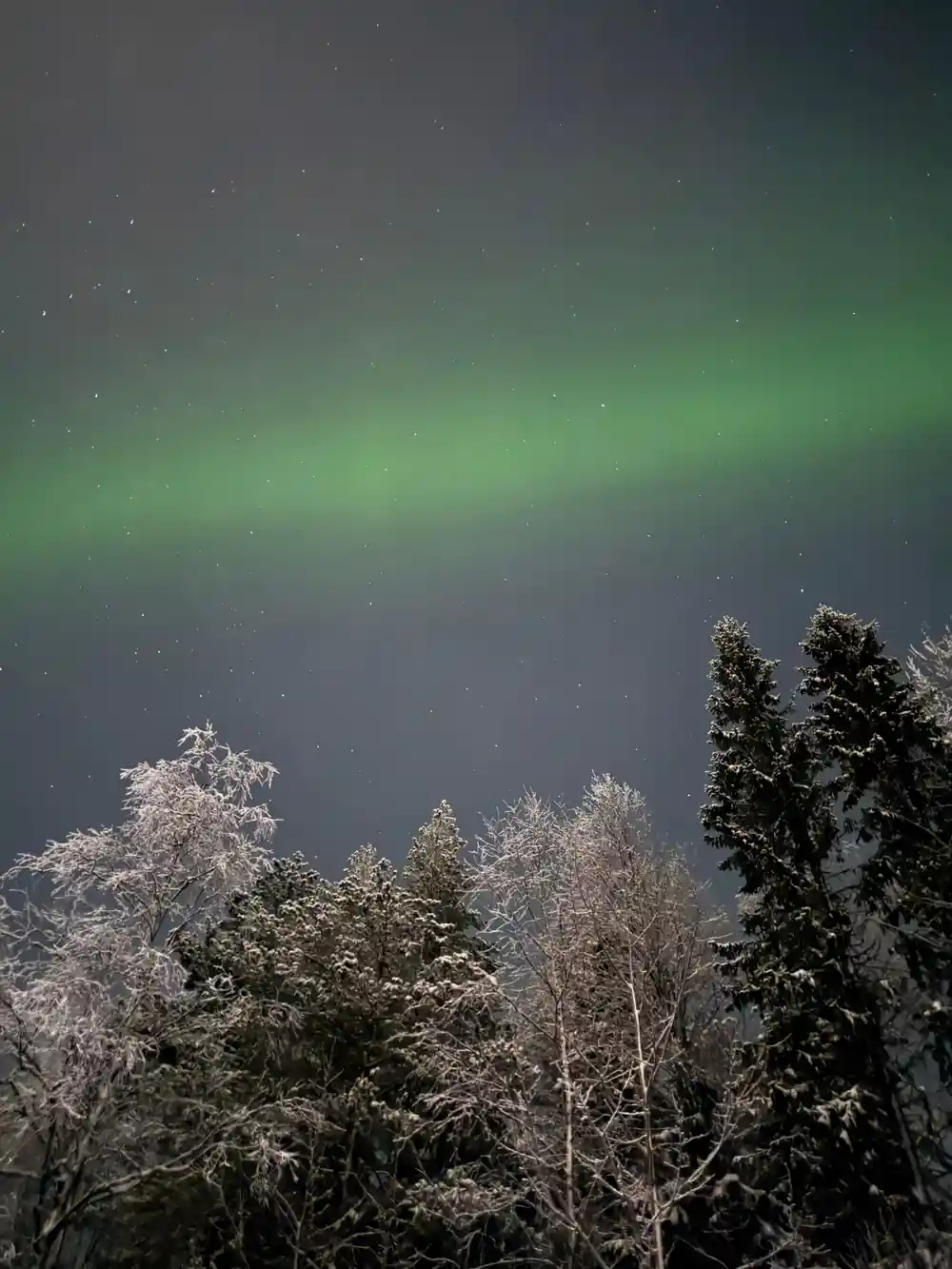
Rovaniemi sits under the auroral oval, and the lights here behave like a seasonal neighbour rather than a once-a-year event. Aurora is visible in Rovaniemi roughly 8 months a year, from late August through mid-April.[1] Inside that long window, some nights are superb and others are wiped out by cloud, moonlight or a quiet geomagnetic field. The calendar gives you the opportunity; the weather decides what you actually see, and no single month is a guarantee.
The physics happens far above the trees. Fast-moving electrons collide with atoms and molecules in Earth's upper atmosphere above 100 km (60 miles), transferring energy that excites them to higher energy states.[9] You do not need to follow the science to enjoy a night out, but it explains why activity arrives in bursts rather than on a timetable. Solar Cycle 25 is expected to have a double peak, which will extend the window for aurora activity well into 2026.[5]
Late August and September: the quiet start
The season opens gently. Early in the season the nights are still short, and displays often sit low on the northern horizon rather than overhead. Autumn in Lapland is a landscape of dark water, birch and low tundra colour, with roads still bare and easy to drive. If you travel this early, be ready to stay up late, because real darkness arrives only in the small hours. Finnish tradition calls the northern lights revontulet, literally fox fires, and a Sami legend says the lights are caused by a magical fox running across the Arctic fells.[10]
The changing season brings contrast: you can walk around in a light jacket in the afternoon and stand in frost at midnight. Because the lakes have not yet frozen, reflections are common, and a modest arc over open water can look far larger than it is. Book several nights if you can, and keep your plans flexible, since autumn cloud can arrive without much warning and leave just as quickly.
Reindeer herding still shapes the land outside the city. According to the Reindeer Herders Association in Finland, there were 186,776 reindeer in Finland in the reindeer husbandry year 2013-14.[11] On autumn drives you may find them on or beside the road, so slow down and give them room. They are also the reason so many local dishes and stories revolve around the animal.
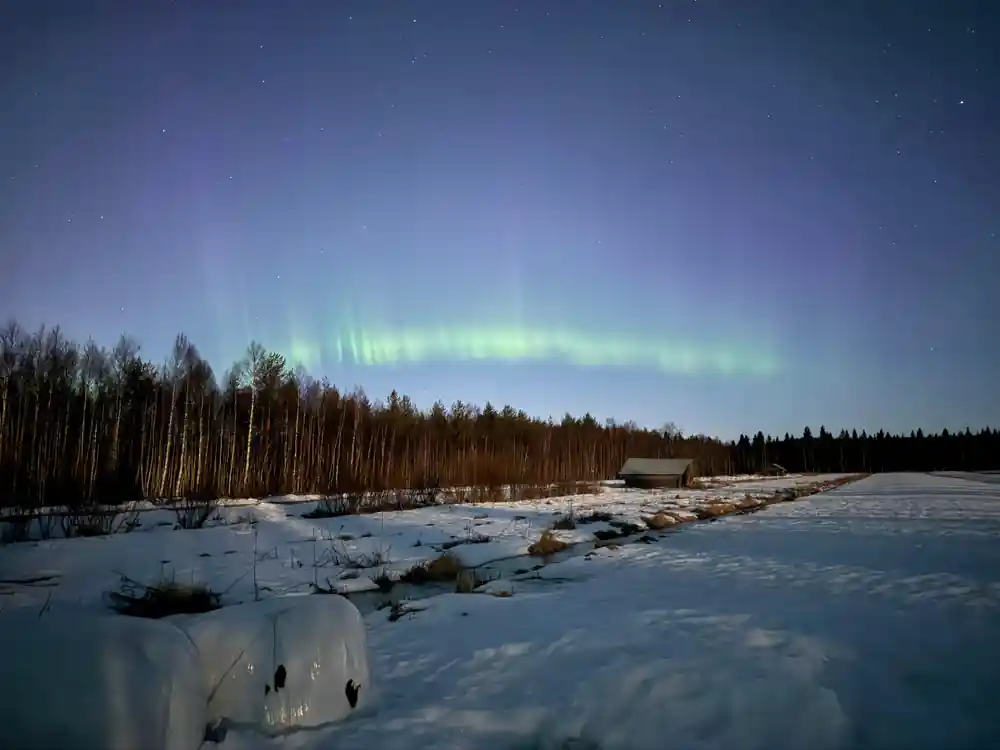
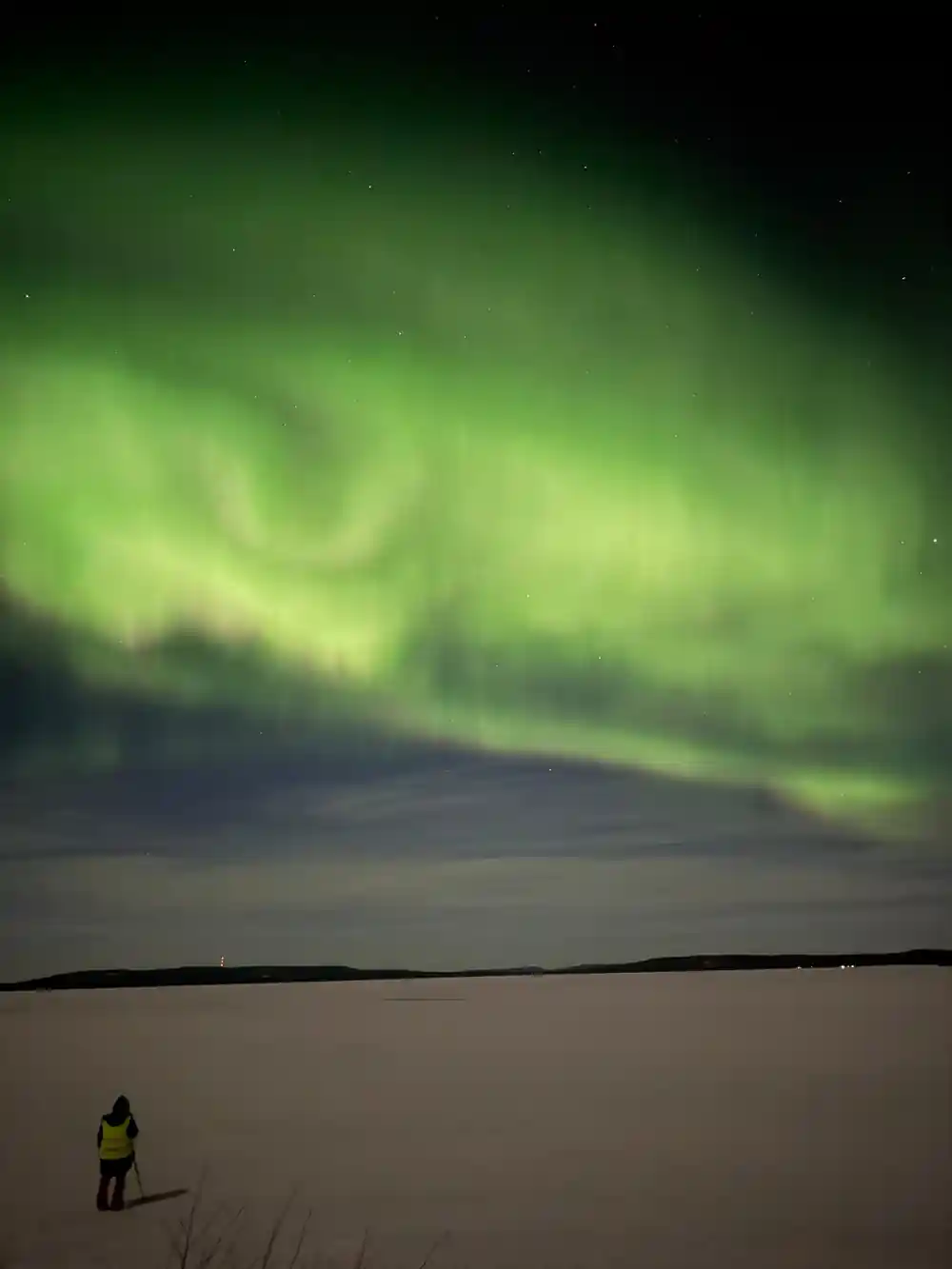
Waiting out the cloud on a frozen lake north of Rovaniemi.
Rovaniemi, Finland, October: dark nights and open water
The dark half of the year has taken over the clock. The aurora season is already underway, and the long evenings mean you do not have to stay up until the small hours to catch a display. Expect mud, mist and thin ice forming at the edges of lakes, so waterproof boots matter more now than they will in deep winter. Pack a headlamp, a flask and gloves that can get wet.
Skies are often clearer now than they will be later in the season, and the air is still fairly kind. There is little or no snow yet, which means the landscape stays dark and the aurora has to carry the picture on its own. Snow usually arrives later, and the snowy part of the winter can last 6-7 months.[4] If you want the aurora without the deep freeze, this is the compromise period to consider.
November Rovaniemi: early darkness and variable skies
When people talk about northern lights and snow, they usually mean a pale ground that makes even a faint arc visible, and cloud that hides it completely. Late autumn brings both. Snowfall begins to build, and Rovaniemi typically receives 150-200 cm of snowfall per winter.[4] The same weather systems that deliver the snow also deliver the cloud, so a single week can swing from clear to overcast.
Daylight shrinks to a few blue hours and the polar night is close. In Rovaniemi the polar night lasts for 2 days.[2] Around that date the sun does not clear the horizon, and the middle of the day feels like a long dusk. For aurora watching this is generous: there is more dark sky, and you are not waiting for a late sunset before you can start looking. Expect wet snow, slush underfoot and a need for spare gloves.
Traffic and tourism build through these weeks as the Christmas season edges closer, but the period still feels calm compared with the holiday rush, and pickup slots are easier to find. Book the nights you care about most, and keep the rest of the trip loose so you can chase a clear sky.
from US$228
A viewing guarantee or refund if conditions are impossible, 8 hours out, limited to 8 participants.[6]
December to February: polar night and deep cold
Deep winter is the postcard version of Lapland, and it is genuinely cold. In January, Rovaniemi's average temperature is between -30 and -15 degrees Celsius.[3] That is an average, so individual nights can be colder, and the dry, still air that helps clear skies also punishes bare skin. Expect December crowds as well: Rovaniemi recorded 1.2 million overnight stays in 2023, up 30% on 2022, with December peaks of up to 10,000 airport arrivals per day.[12]
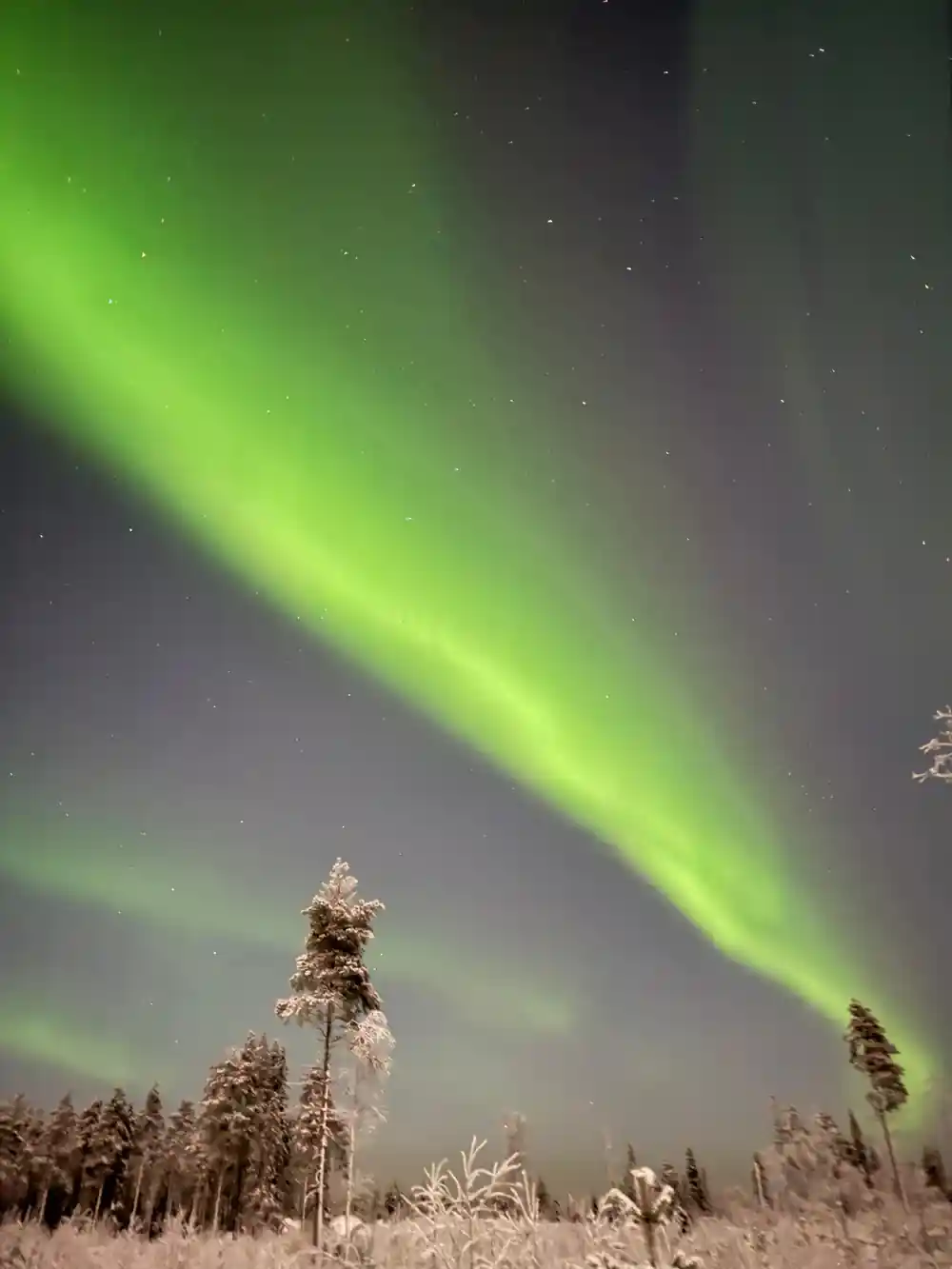
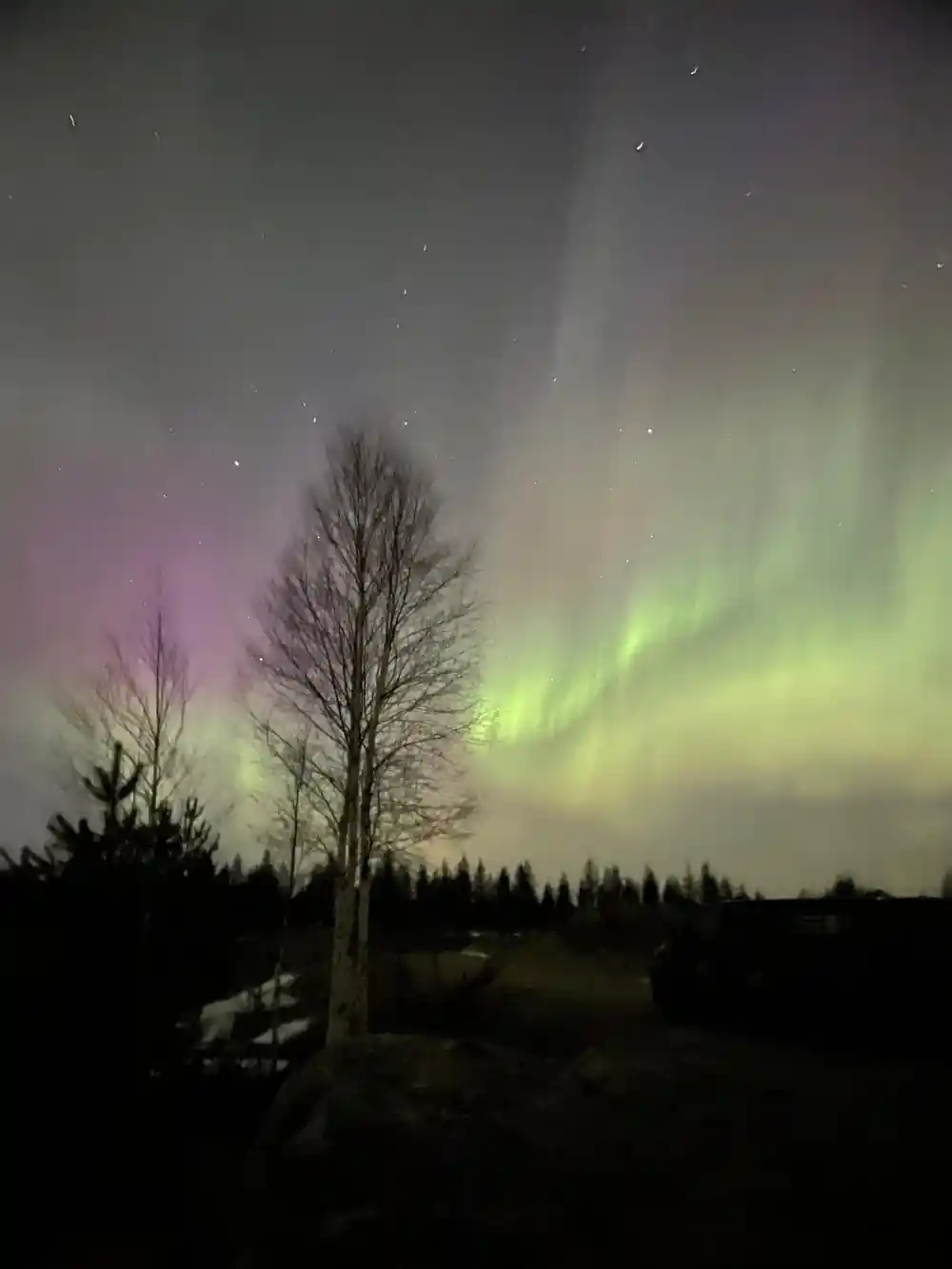
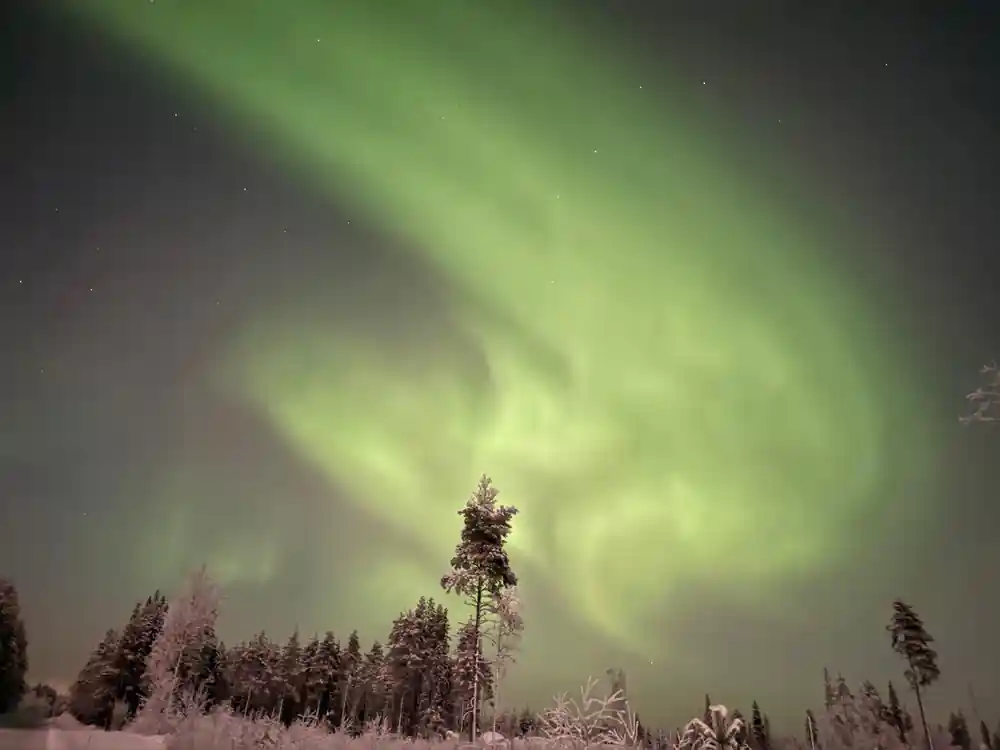
Clear, cold nights are what aurora photographers hope for, and the colours you see depend on altitude and gas. Green aurora is caused by oxygen at 100-150 km, red by oxygen above 200 km, and violet by ionized nitrogen below 100 km.[13] On a strong night you may see structure as well as colour: arcs, bands and, occasionally, a corona directly overhead. A camera on a small tripod will record far more than your eyes can pick out in the dark.
Cold management is a skill. Work in short bursts outside, come in for warm drinks, and keep batteries close to your body, because they lose power quickly in deep cold. Your base layers matter more than anything else you wear that night, and a damp cotton shirt will undo the best jacket you own.
March and early April: the last of the season
By early spring the light is back. Days grow long, the snow lies deep and often crusts overnight, and evenings are mild enough to stand outside comfortably for hours. The aurora season keeps going, and Solar Cycle 25 is expected to have a double peak, which will extend the window for aurora activity well into 2026.[5] Late winter suits anyone who wants snow underfoot and usable darkness at the same time.
The tail of the season is brighter. The last dark nights fade, and before long Rovaniemi is bright enough at night that only a strong display shows clearly. If you are looking at the very end, remember that the auroral oval does not switch off cleanly, and that the Kp index ranges from 0 to 9, with Kp 0-2 describing an aurora that is far north, quite dim in intensity and not very active.[14]
Once in a while something stranger appears. STEVE, or Strong Thermal Emission Velocity Enhancement, is a narrow mauve ribbon far equatorward of the auroral oval, produced by a ~5 km/s channel of westward-drifting ions that heats the atmosphere, not by particle precipitation.[15] It is rare, it is easy to mistake for a cloud, and it is one more reason to keep looking up on the drive home.
Planning your aurora hunt across the season
Travellers often ask how many days northern lights last on a trip, and the useful answer is about nights rather than days. A display can build, fade and return across a single evening, so the only real lever you have is the number of evenings you are willing to try. Give yourself several nights in Rovaniemi, and treat a strong forecast as a bonus rather than the whole plan.
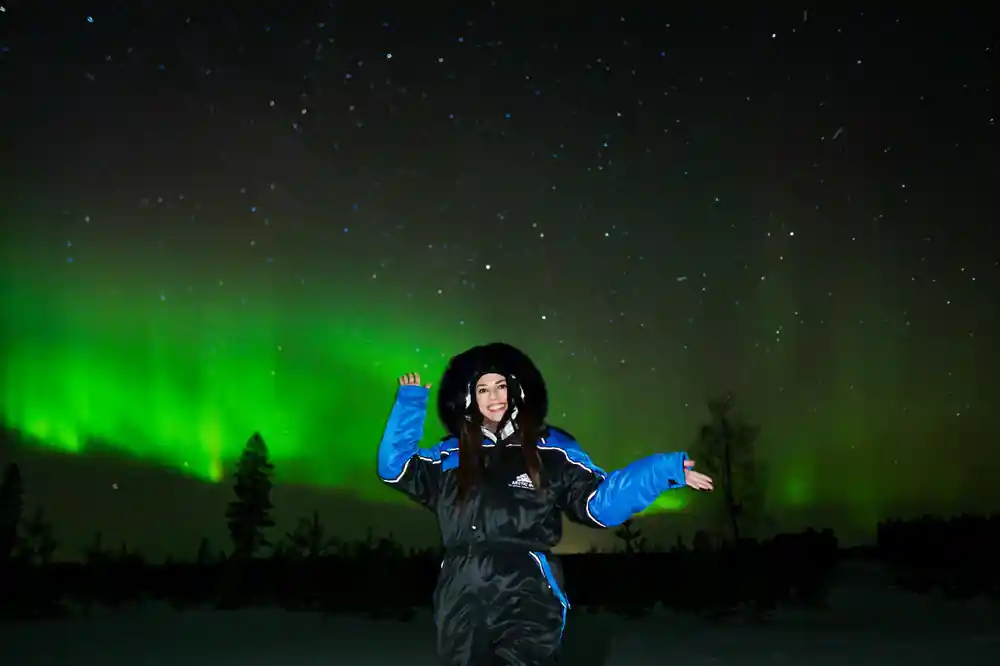
Cold is the other variable. An insulated thermal suit used for Arctic activities can be rated to minus 40, but a damp cotton base layer defeats its insulation.[16] Wear wool or synthetic next to your skin, add a fleece and a windproof shell, and keep a spare pair of gloves in a pocket. Hand warmers, a thermos and a headlamp turn a long wait into a comfortable one. The guaranteed small-group hunt runs for 8 hours with a group limited to 8 participants.[6]
Geography helps as well. In Rovaniemi the Arctic Circle runs through Santa Claus Village, eight kilometres north of the city centre, and it is clearly marked there.[17] Santa Claus Village receives over 600,000 visitors a year.[12] Staying outside the centre, near the river or out towards the village, puts less light between you and the sky and shortens the drive to genuinely dark ground.
How long the polar night lasts further north
Days of polar night: Rovaniemi 2, Ylläs 160 km north with 16, and Utsjoki 465 km north with 52.[2]
Aurora tour from-prices, per person
From-prices per person in US dollars for these GetYourGuide listings.[6][7][8][18]
When to come, month by month
Plan your aurora night
Pick your window
Aim for several nights between late August and mid-April so one cloudy evening does not decide the trip.[1]
Book before December
December peaks at up to 10,000 airport arrivals per day, so sort your tours and gear early.[12]
Layer properly
Use wool or synthetic base layers, since damp cotton defeats even a suit rated to minus 40.[16]
Keep it flexible
Free cancellation up to 24 hours in advance lets you move a night if the forecast turns.[6]
Know what you see
Green comes from oxygen at 100-150 km, red from oxygen above 200 km, violet from nitrogen below 100 km.[13]
Book the guaranteed aurora night in Rovaniemi
from US$228Reserve now & pay later