In a nutshell
- Fast-moving electrons collide with atoms and molecules in the upper atmosphere above 100 km (60 miles), and the collisions excite them to higher energy states.[1]
- Rovaniemi has visible aurora roughly 8 months a year, from late August through mid-April, so aurora nights are not a narrow winter window.[2]
- Green comes from oxygen at 100-150km, red from oxygen above 200km, and violet from ionized nitrogen below 100km.[3]
- The Kp index ranges from 0 to 9, and at Kp 0-2 the aurora will be far north, quite dim in intensity, and not very active.[4]
- The tour booked here runs 8 hours in a group limited to 8 participants, with a guaranteed viewing or a refund if conditions are impossible.[5]
- Top choice Guaranteed Sightings Tour from US$228 Duration8 hours[5]Rating4.64 from 4,381 reviews[5]Group sizeLimited to 8 participants[5]GuideEnglish[5]CancellationCancel up to 24 hours ahead[5] Check availability
- Small-Group Wilderness Tour from US$148 Duration4 hours[6]Rating4.34 from 1,530 reviews[6]Group sizePrivate or small groups available[6]GuideEnglish[6]CancellationCancel up to 24 hours ahead[6] See this tour
- Guaranteed Aurora Hunt from US$80 Duration5 - 8 hours[7]Rating4.85 from 1,296 reviews[7]Group sizePrivate or small groups available[7]GuideEnglish, Finnish, Spanish[7]CancellationCancel up to 24 hours ahead[7] See this tour
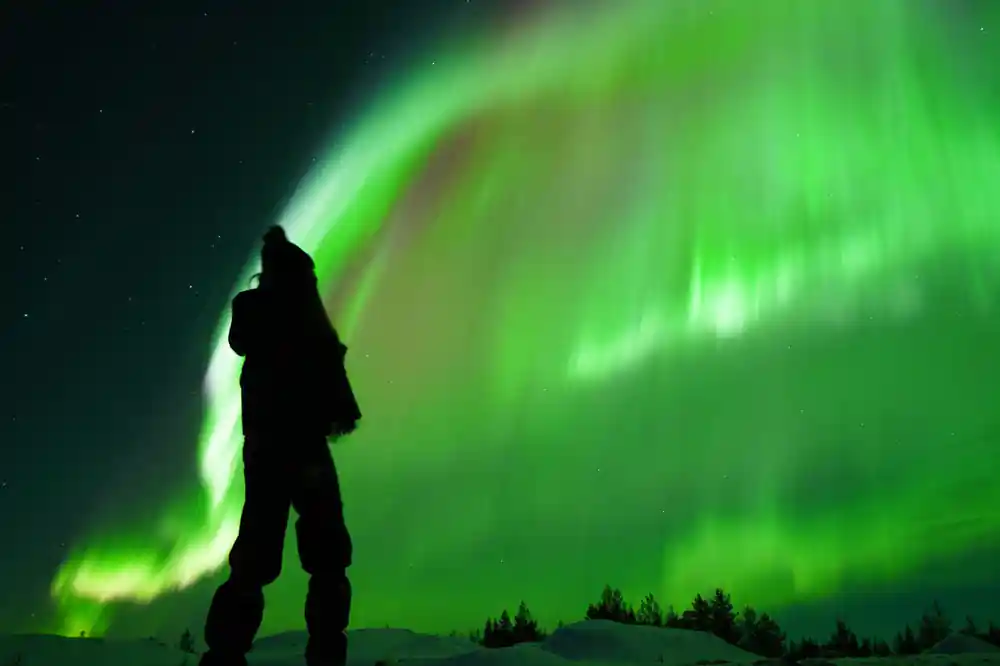
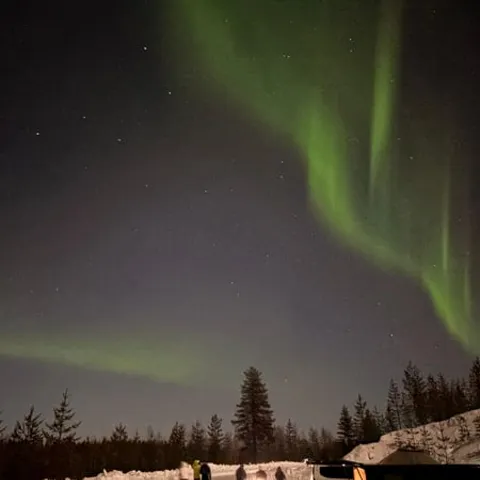
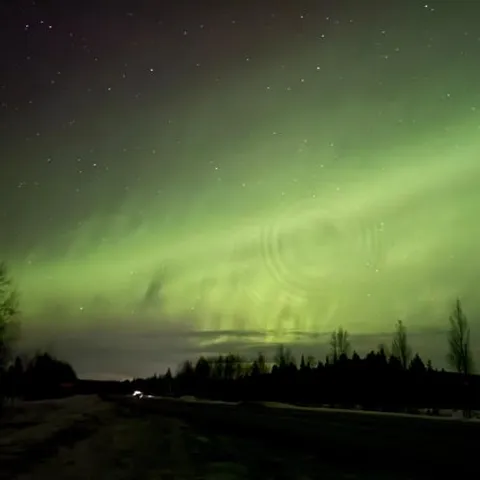
When the fast moving electrons, traveling nearly 1/10th the speed of light (20,000 km/sec or 44 million mph), collide with the atoms and molecules in Earth's upper atmosphere (above 100 km or 60 miles) they transfer energy that "excites" the atom or molecule to higher energy states.
Worth planning a whole night around
On the night
How Northern Lights Work: Electrons, Atoms and Altitude
The northern lights are not a glow coming off the snow, a reflection from the ice or a light show that anyone switches on. They begin with the sun, which constantly sends out a stream of charged particles. Earth's magnetic field steers part of that stream down towards the poles, and when those particles reach the gases high above the ground, the gases release light. Every display you watch from a frozen lake outside Rovaniemi is happening far above the treetops, in air so thin it would not keep you conscious.
The mechanism itself is a collision. Fast-moving electrons collide with atoms and molecules in Earth's upper atmosphere above 100 km (60 miles), and the collisions transfer energy that excites them to higher energy states.[1] What follows is a tiny release of light as each excited atom settles back down, and there are so many atoms up there that the result is visible from the ground as a curtain, an arc or a rippling band of green.
Because the particles arrive in bursts rather than in a steady flow, a display can be faint one minute and bright the next. A quiet sky is not proof that nothing is happening; it can simply mean the burst has not arrived over your patch of Lapland yet. Aurora hunting rewards patience far more than luck, and a night with several hours in it gives you more chances than a quick dash out of town.
The Auroral Oval and Rovaniemi's Place Under It
The aurora does not light up the whole sky at once. It forms in a ring around the magnetic pole, known as the auroral oval, and that ring shifts and swells with the solar wind. The same process explains why northern lights occur in a ring rather than a wash across the whole sky. Northern Scandinavia sits under the southern part of the oval on most nights, and Rovaniemi sits comfortably inside that zone.
Rovaniemi has visible aurora roughly 8 months a year, from late August through mid-April.[2] Those months take in warm, dark, snow-free autumn evenings as well as the deep cold of midwinter, so the season is far wider than most people expect. The Arctic Circle runs through Santa Claus Village, 8 kilometres north of the city centre, and is clearly marked there.[10] Crossing the line makes a good photograph, though the lights ignore it and appear wherever the oval and the cloud allow.
Winter here is long and white. Rovaniemi typically receives 150-200 cm of snowfall per winter, and the snowy part of the winter can last 6-7 months.[11] That snow is not only scenery. It reflects what light there is, so a bright arc over a snowfield reads much stronger than the same arc over bare, dark ground, and the forest tracks away from town stay open for vans through the season.
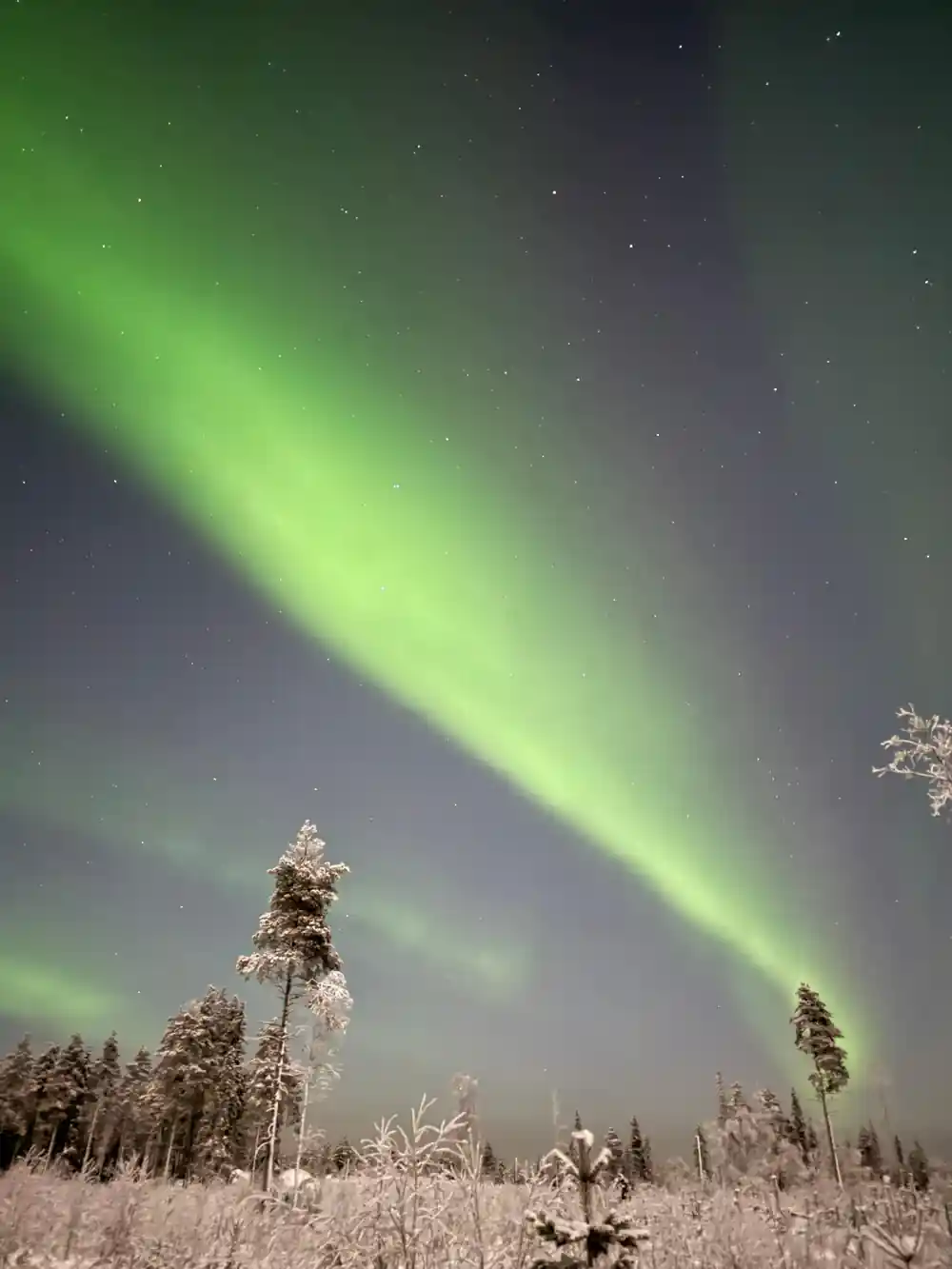
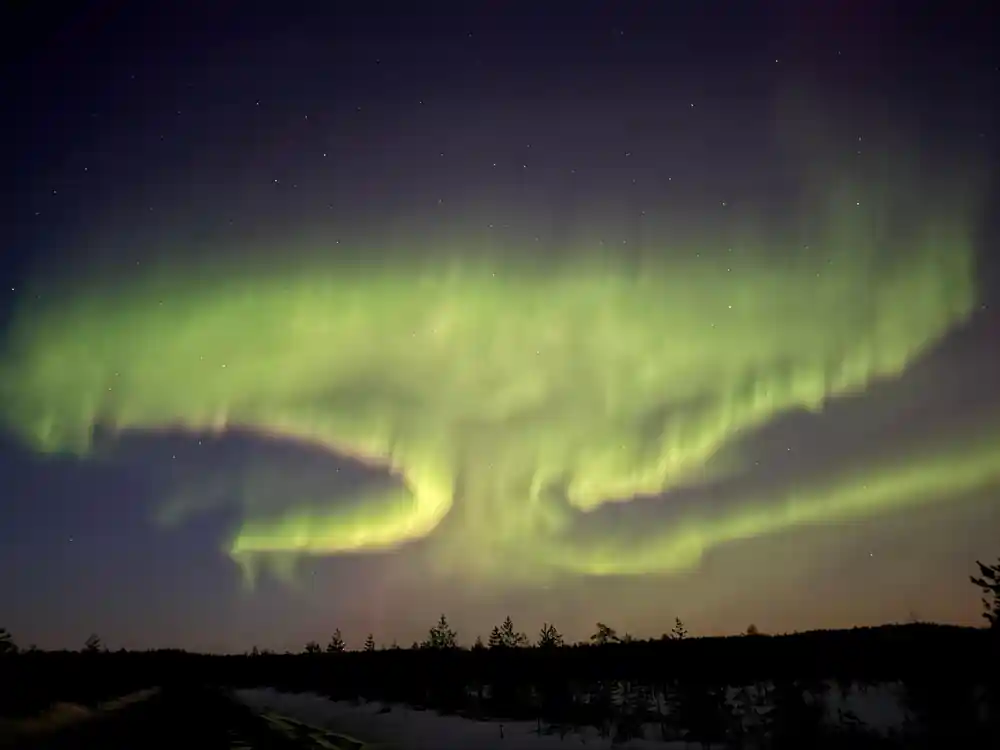
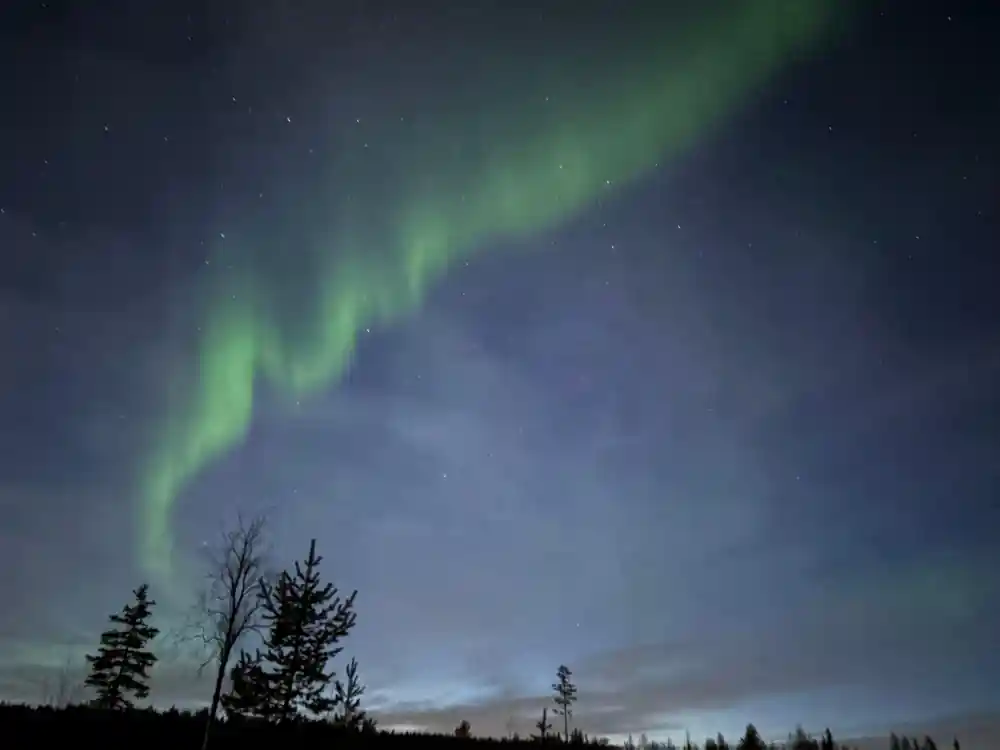
A green arc folding over the frozen forest north of Rovaniemi
Reading the Kp Index: What the Numbers Really Tell You
The Kp index ranges from 0 to 9, and for Kp in the range 0 to 2 the aurora will be far north, quite dim in intensity, and not very active.[4] It is a planetary number, averaged across the globe, so it describes the general level of disturbance rather than what is directly above your head. On a quiet Kp night in Rovaniemi you can still be standing under a working oval.
Two things beat the index when you are deciding how to spend an evening. The first is cloud, because a strong display behind thick cloud looks like nothing at all. The second is mobility, because the useful question is not how strong the aurora is but how far you can drive to find clear sky. A guide with a van, a laptop full of satellite data and a good local weather instinct can move you out from under a snow shower and into a gap.
Rovaniemi is a busy winter town and it pays to plan ahead. Rovaniemi recorded 1.2 million overnight stays in 2023, up 30% on 2022, and December brings peaks of up to 10,000 airport arrivals per day, while Santa Claus Village receives over 600,000 visitors a year.[12] The shoulder seasons are far quieter, and the aurora season is open right across them.
Why Northern Lights Red, Green and Violet Form at Different Heights
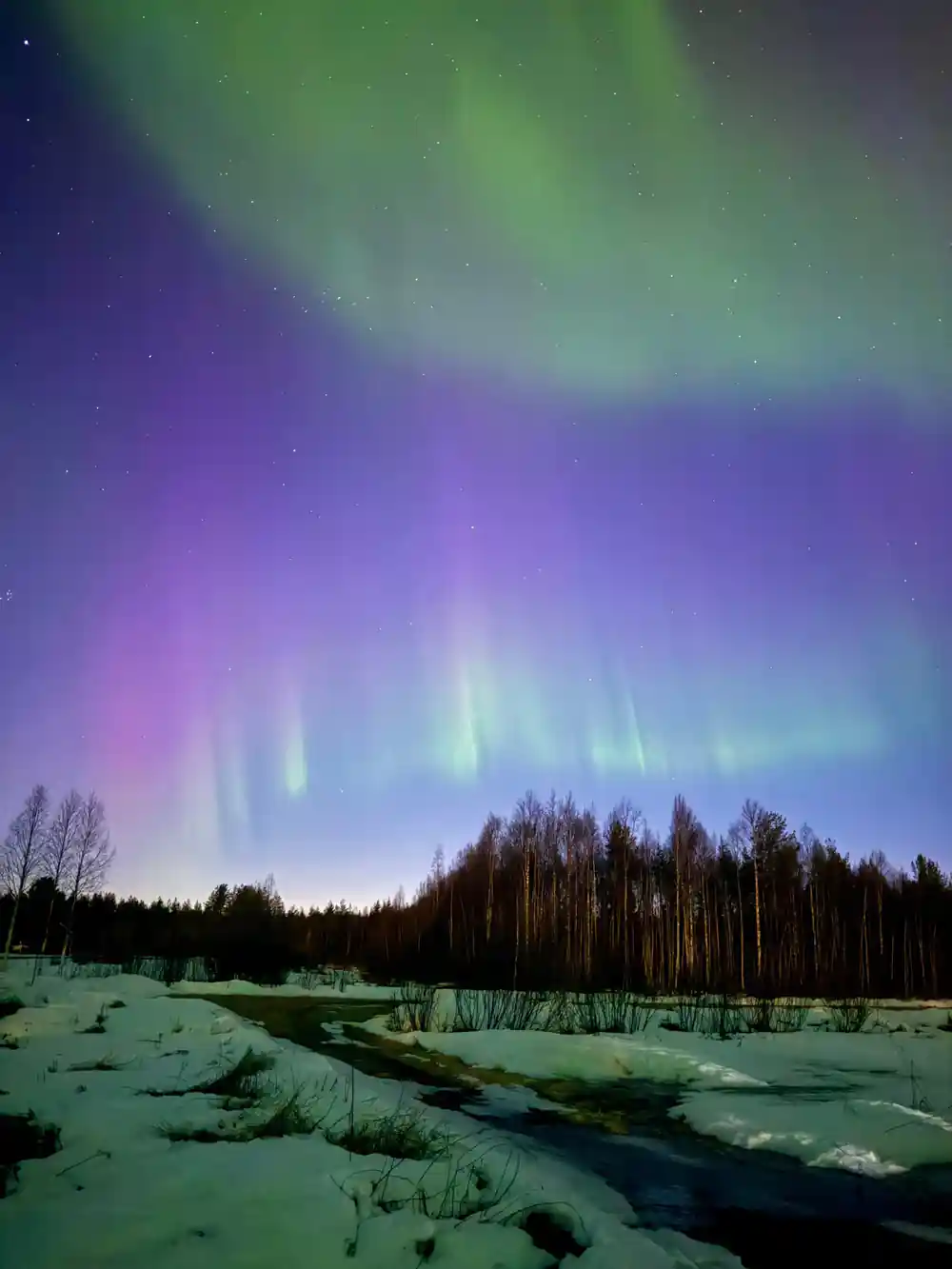
Colour is chemistry and altitude working together. Green aurora is caused by oxygen at 100-150km, red by oxygen above 200km, and violet by ionized nitrogen below 100km.[3] A single display can hold all three at once, stacked like layers of a cake, with the violet fringe low, the green curtain in the middle and the red wash high above.
Your eyes are the reason the green usually wins. In dim light the human eye is most sensitive to green and is poor at picking up the deep red of the high oxygen layer, which is often a soft glow spread widely rather than a sharp edge. Photographers on long exposures record red and violet far more easily than you will with the naked eye, so a photograph can genuinely show more colour than the moment seemed to.
That does not make red rare. It tends to appear during more disturbed conditions, when the incoming energy pushes the aurora higher and further south. If you see a dull red flush above a bright green arc, stay outside, because the display is usually still building rather than finishing.
from US$228
The tour booked through this site runs 8 hours in a group limited to 8 participants, with a refund if viewing is impossible.[5]
Altitude Layers and the Chemistry Behind Auroral Colours
The atmosphere is not one uniform gas. It changes with height, and so does the mixture of oxygen and nitrogen that incoming electrons meet. Atomic oxygen gives the familiar green and the high red. Molecular and ionized nitrogen contribute blues and purples, which mostly appear at the lower edge of a display where the aurora is densest and the eye struggles to separate the colours. The same storm can therefore look green from one angle and purple-tinged from another.
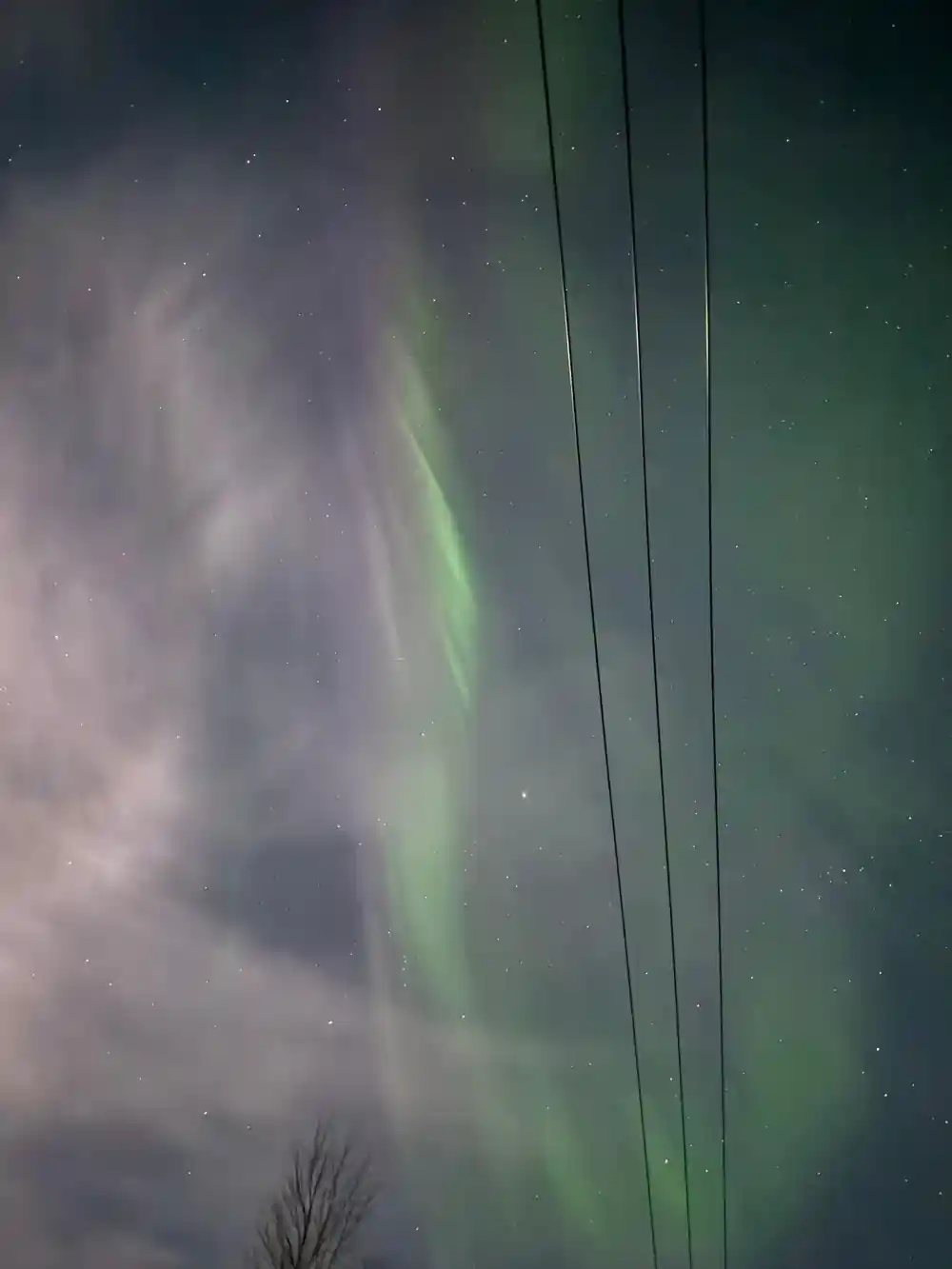
Not every strange ribbon in the sky is an aurora. STEVE, or Strong Thermal Emission Velocity Enhancement, is a narrow mauve ribbon far equatorward of the auroral oval, caused by a ~5 km/s channel of westward-drifting ions heating the atmosphere rather than by particle precipitation.[13] It looks like a pale, straight fence across the sky and can appear alongside a normal green arc, which is why keen sky watchers photograph everything rather than only the obvious.
Finnish tradition calls the northern lights revontulet, literally meaning fox fires, and a Sami legend says the lights are caused by a magical fox running across the Arctic fells.[14] It sits well beside the physics. The science explains the light, and the story explains why people here have stood in the cold watching it for generations.
A Substorm Overhead: How Fast a Display Develops
A substorm is the part of the night most people hope for. An arc brightens in one place, a fold appears, and within minutes the whole thing can be rippling and moving overhead. Then it fades back to a faint band, rebuilds and does it again. Nothing guarantees a substorm at a convenient hour, and how long northern lights last on the night is set by that cycle rather than by the clock, so the sensible plan is to be outside and warm for as long as you can manage.
Warmth is the limiting factor more often than sky conditions. In January, Rovaniemi's average temperature is between -30 and -15 degrees Celsius.[8] An insulated thermal suit used for Arctic activities can be rated to minus 40, but a damp cotton base layer defeats its insulation.[9] Wear wool or synthetic next to your skin, carry a spare pair of gloves, and keep hand warmers in your pockets rather than your bag.
The tour booked through this site runs 8 hours and is limited to 8 participants.[5] A window that long leaves room to drive through several weather zones, wait out a snow shower and still be in position when a substorm begins, which suits the way aurora nights actually unfold.
Solar Maximum, Cycle 25 and the Years Ahead
Aurora activity follows the sun's own rhythm. Solar Cycle 25 is expected to have a double peak, which will extend the window for aurora activity well into 2026.[15] For a traveller that means the coming seasons carry more chances of disturbed conditions, brighter displays and sightings further south than the quiet years of the cycle.
Darkness is the other half of the equation. In Rovaniemi, the polar night lasts for 2 days.[16] That is a small window, and the rest of the winter is not one continuous night either: daylight shrinks to a few blue hours and then grows again. Those long evenings at the shoulders of winter are what make the aurora season in Rovaniemi so much longer than the darkest weeks alone.
The practical answer is to treat the sky as a schedule you cannot control and everything else as a schedule you can. Book a night with a guaranteed-sightings tour, keep another night free in case the first is cloudy, and check the aurora forecast once in the evening rather than constantly. Then put the phone away, look up, and let the electrons do their work.
Where each aurora colour forms
Altitude of each layer: violet from ionized nitrogen below 100km, green from oxygen at 100-150km, red from oxygen above 200km.[3]
Aurora tours from Rovaniemi, from-prices per person
From-prices per person, aurora tour listings:[5][6][7][17]
When to go and when to book
Reading an aurora night
Check the cloud first
Before you check any aurora number, look at the sky and the cloud radar. A clear gap nearby beats a strong forecast under snow cloud.
Then check the Kp
The Kp index ranges from 0 to 9, and at Kp 0-2 the aurora will be far north, quite dim in intensity, and not very active.[4]
Dress for standing still
Wool or synthetic next to your skin, never cotton: a damp cotton base layer defeats a suit rated to minus 40.[9]
Give the night time
The tour booked here runs 8 hours, which leaves time to drive to clear sky and wait for the aurora to build.[5]
Book the guaranteed-sightings aurora tour from Rovaniemi
from US$228Reserve now & pay later