In a nutshell
- Rovaniemi has visible aurora roughly 8 months a year, from late August through mid-April, so most dark nights give you something to watch.[1]
- Green comes from oxygen at 100-150km, red from oxygen above 200km and a violet base from ionized nitrogen below 100km.[2]
- January averages between -30 and -15 degrees Celsius, and Rovaniemi typically receives 150-200 cm of snowfall per winter.[3][4]
- Reindeer, hares and foxes move through the dark, and Finland held 186,776 reindeer in the reindeer husbandry year 2013-14.[5]
- The Northern Lights Tour with Guaranteed Sightings runs 8 hours, is limited to 8 participants, and refunds you if conditions make viewing impossible.[6]
- Top choice Guaranteed Sightings from US$228 Duration8 hours[6]Rated4.64 from 4,381 reviews[6]GuideLive tour guide: English[6]CancellationCancel up to 24 hours ahead[6] Check availability
- Wilderness Tour from US$148 Duration4 hours[7]Rated4.34 from 1,530 reviews[7]GuideLive tour guide: English[7]CancellationCancel up to 24 hours ahead[7] See this tour
- Aurora Snowmobile Safari from US$160 Duration4 hours[8]Rated4.33 from 1,135 reviews[8]GuideLive tour guide: English[8]CancellationCancel up to 24 hours ahead[8] See this tour
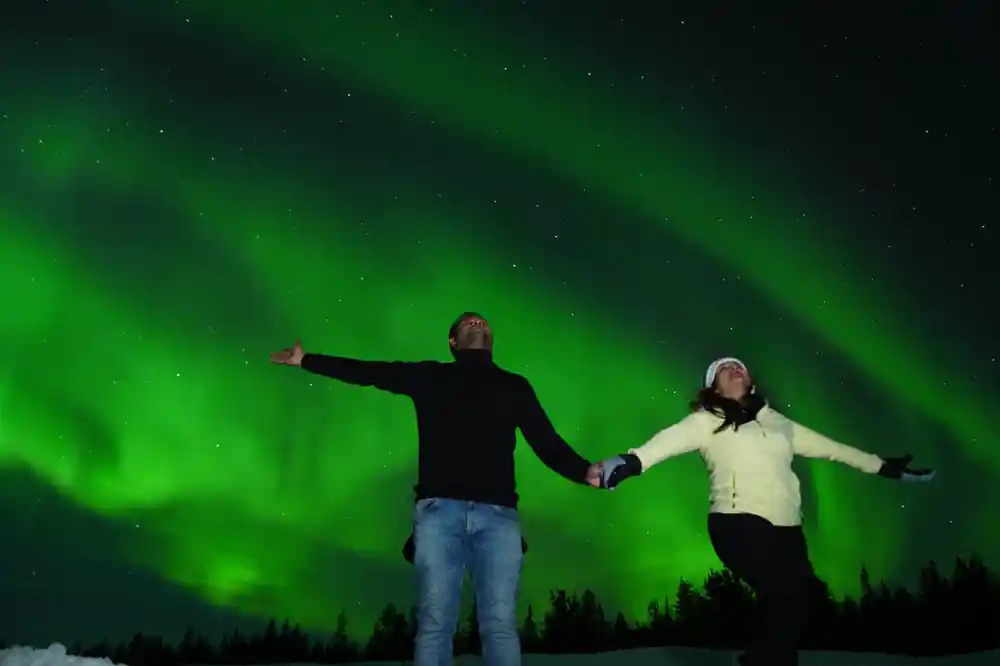
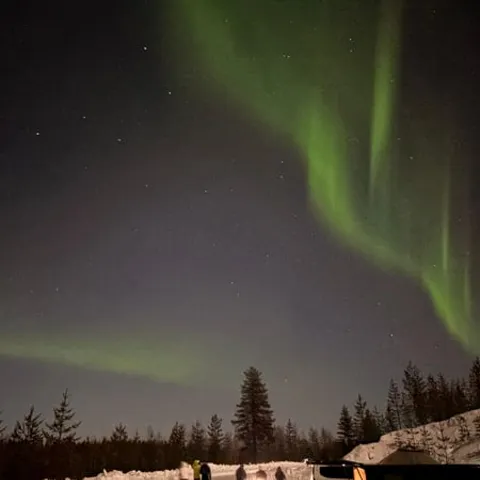
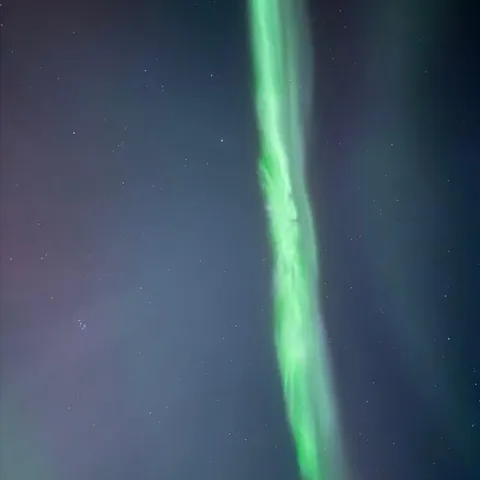
The Finnish word for aurora borealis is “revontulet”, which literally means “fox fires”. A Sami legend tells that the lights are caused by a magical fox running across the Arctic fells.
Should you book a night tour in Rovaniemi?
Before you leave the hotel
Out in the dark
- Wool or synthetic against your skin, never damp cotton.[9]
- Give your eyes time to adjust before you judge the sky.
- Ask your guide what has been seen locally that week.
- Stay with the group and keep off lake ice unless your guide says it is safe.
The Arctic Sky Without Light Pollution
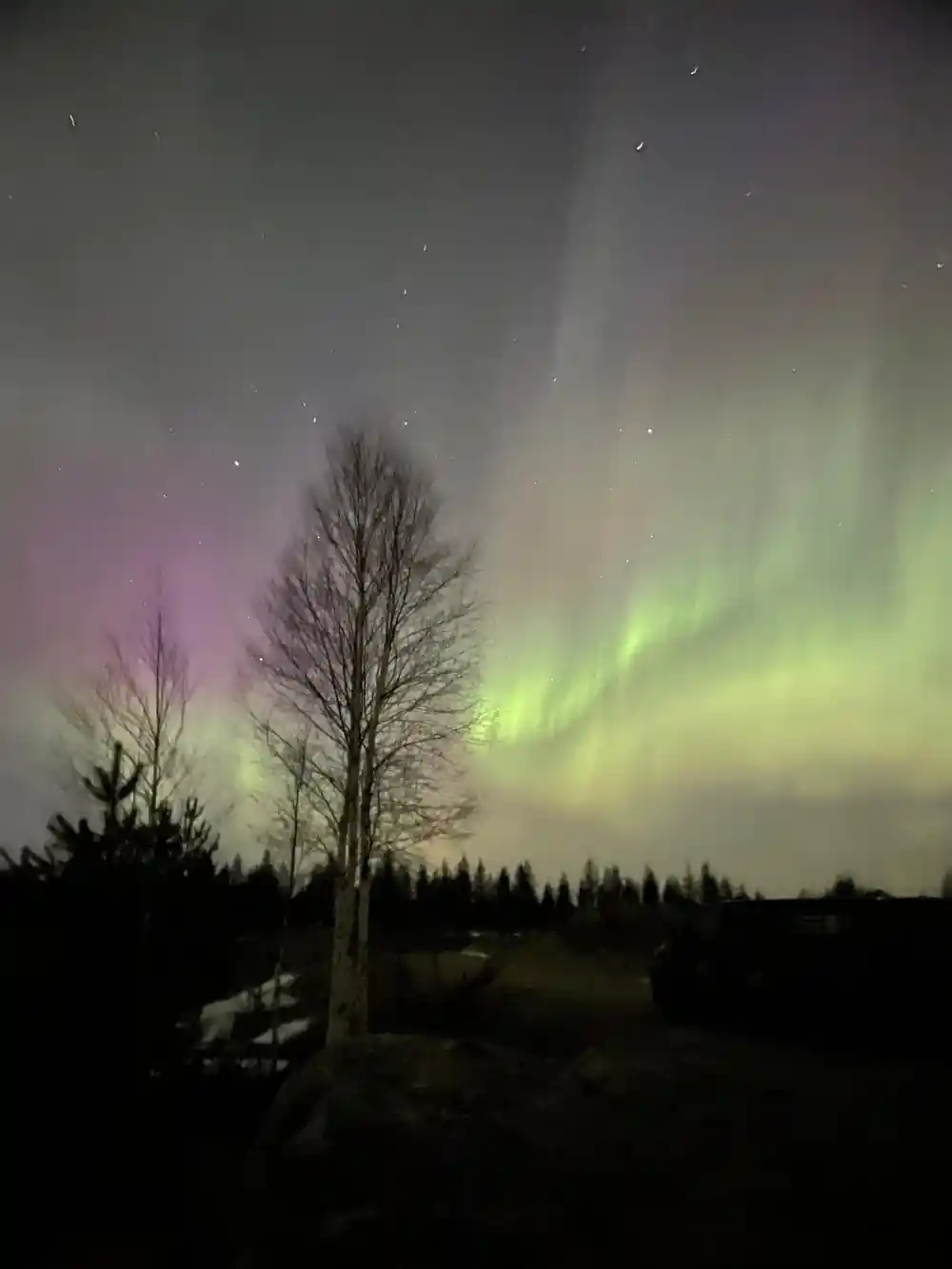
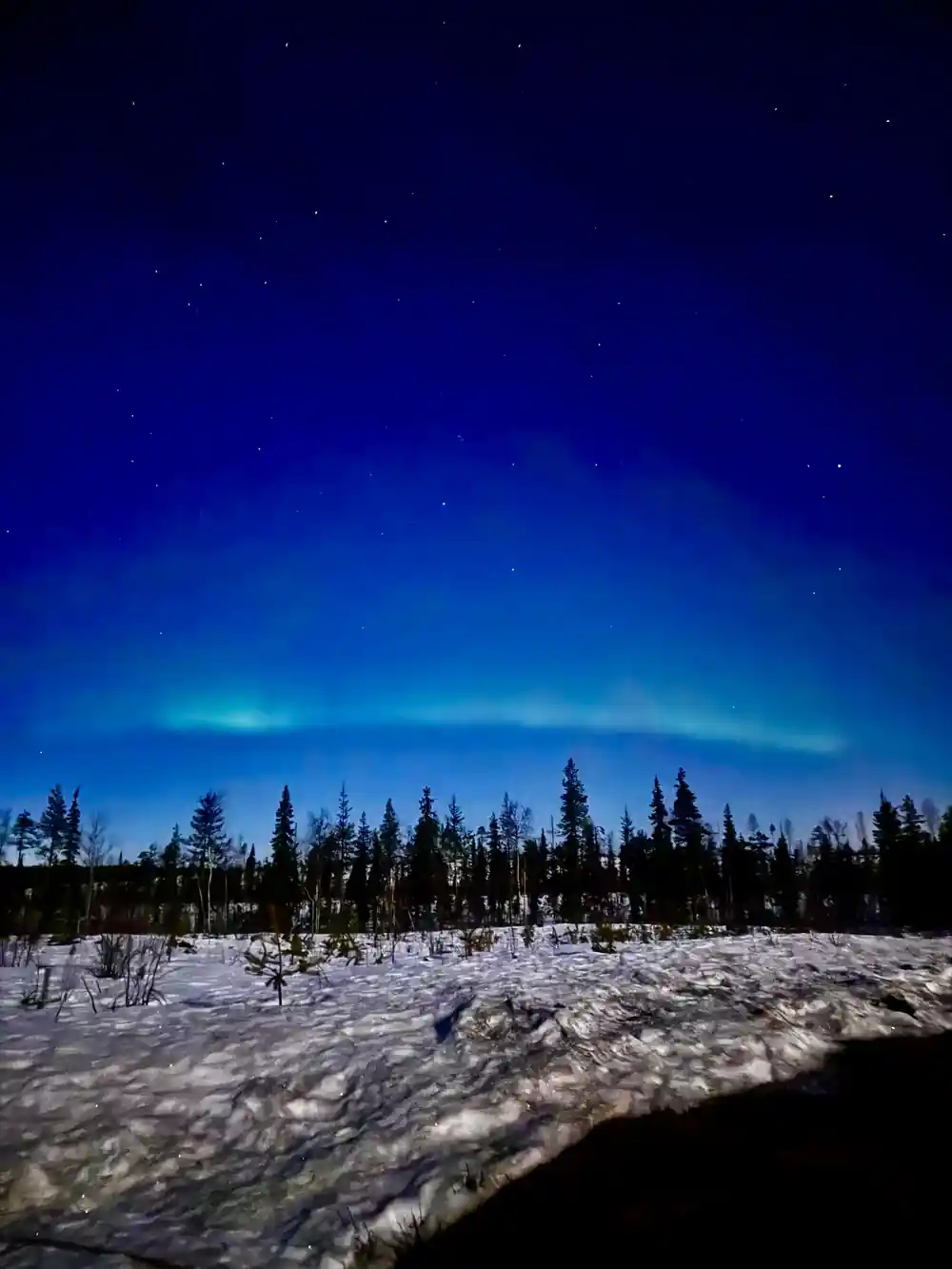
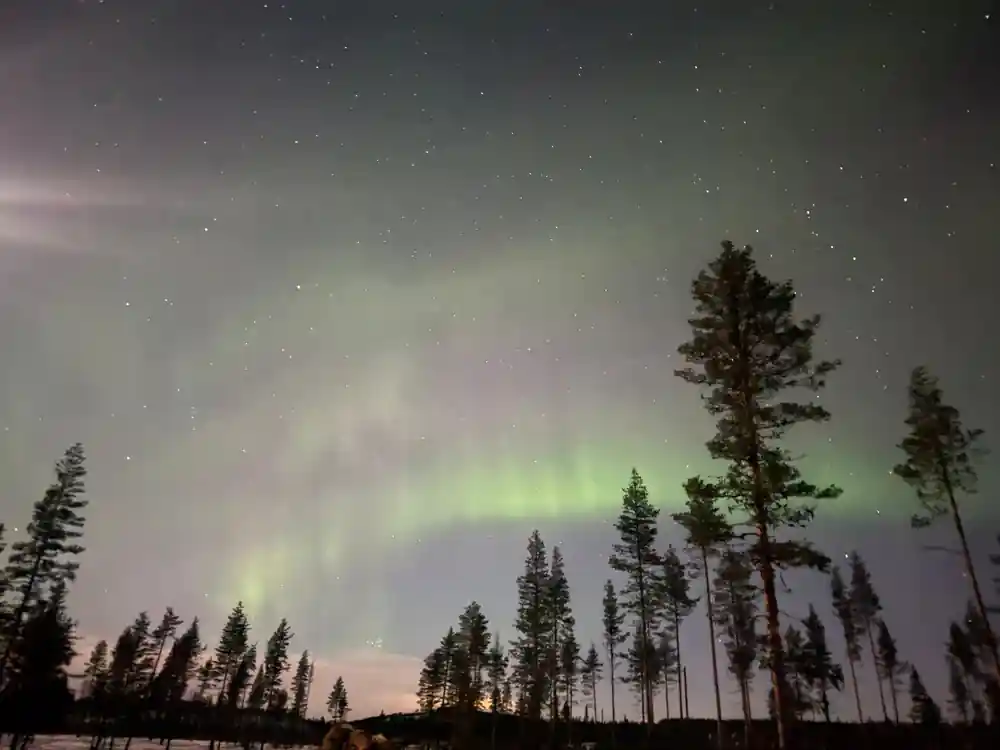
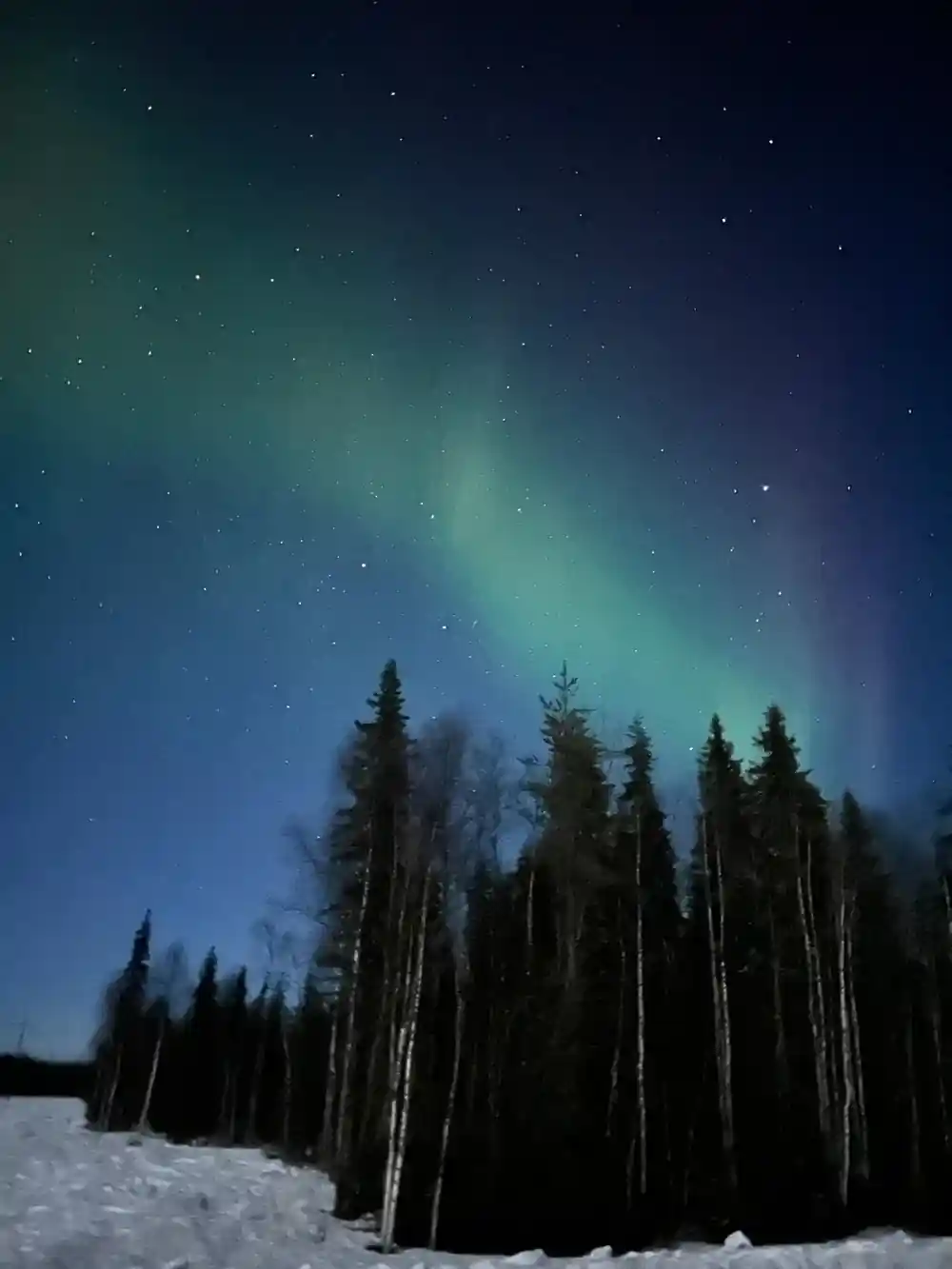
Step away from the streetlights of Rovaniemi and the sky reorganises itself. There is no orange haze along the horizon, just a black dome with more stars than most travellers have ever seen. Rovaniemi has visible aurora roughly 8 months a year, from late August through mid-April, so the darkness overhead is a season rather than a lucky break.[1] What surprises first-timers is how much there is to watch when the aurora itself is quiet. The Milky Way thickens into a grainy band, faint stars appear in the gaps between the bright ones, and the whole sky seems to be moving even when nothing green is overhead.
Light pollution is the quiet enemy of a good night sky. A town of any size throws a faint dome into the lower sky, and the weaker stars, the Milky Way and gentle aurora all disappear inside it. A short drive out along a forest road is usually enough, and the change is obvious the moment the engine stops: the horizon drops away, the sky gets deeper, and you start seeing things you had been staring straight through. Give your eyes time to adjust. Without white light they keep opening up, and a red headlamp keeps every bit of that advantage.
Stars and Planets in the Lapland Winter Night
Winter nights here are long, and the constellations rotate slowly overhead while you wait. Orion leans across the southern sky, the Plough swings around the pole star, and on some evenings a bright planet hangs low in the west like a lamp that forgot to move. Auroras are made far above all of this, where fast-moving electrons collide with atoms and molecules in the upper atmosphere above 100 km (60 miles), transferring energy that excites them to higher energy states.[10]
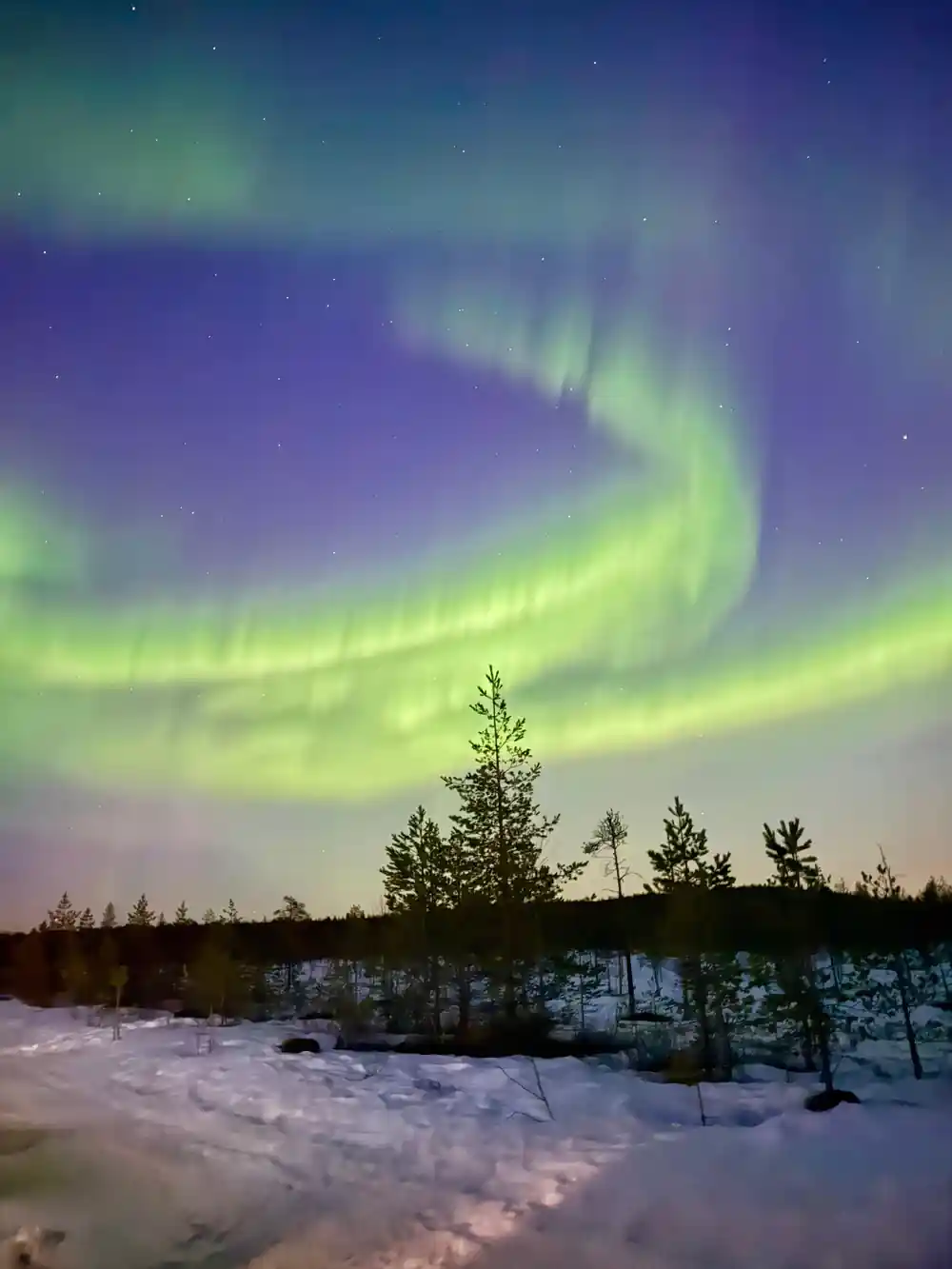
Colour tells you something about height. Green comes from oxygen at 100-150km, red from oxygen above 200km, and the violet fringe at the base from ionized nitrogen below 100km.[2] Activity is measured with the Kp index, which ranges from 0 to 9; for Kp 0-2 the aurora will be far north, quite dim and not very active.[11] Streaks of mauve known as STEVE appear far equatorward of the auroral oval, produced by a roughly 5 km/s channel of westward-drifting ions heating the atmosphere rather than by particle precipitation.[12]
Knowing this changes how you watch. A dim grey arc that never brightens is still the aurora, and a camera on a night setting will often show structure your eyes cannot pick out. Look north first, then look up, and give the sky a long, quiet look before deciding that nothing is happening. Patience and warm feet usually decide what you see.
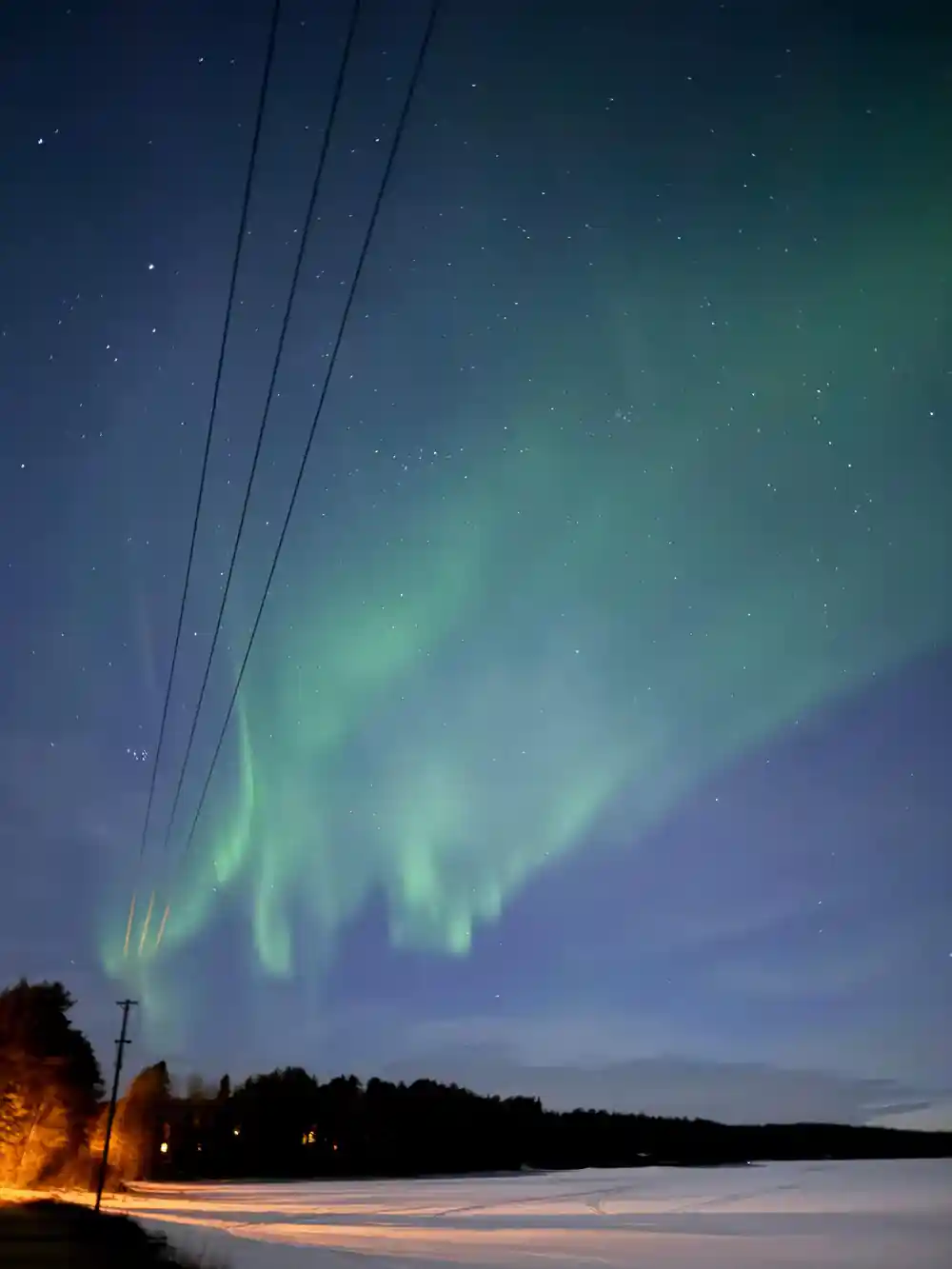
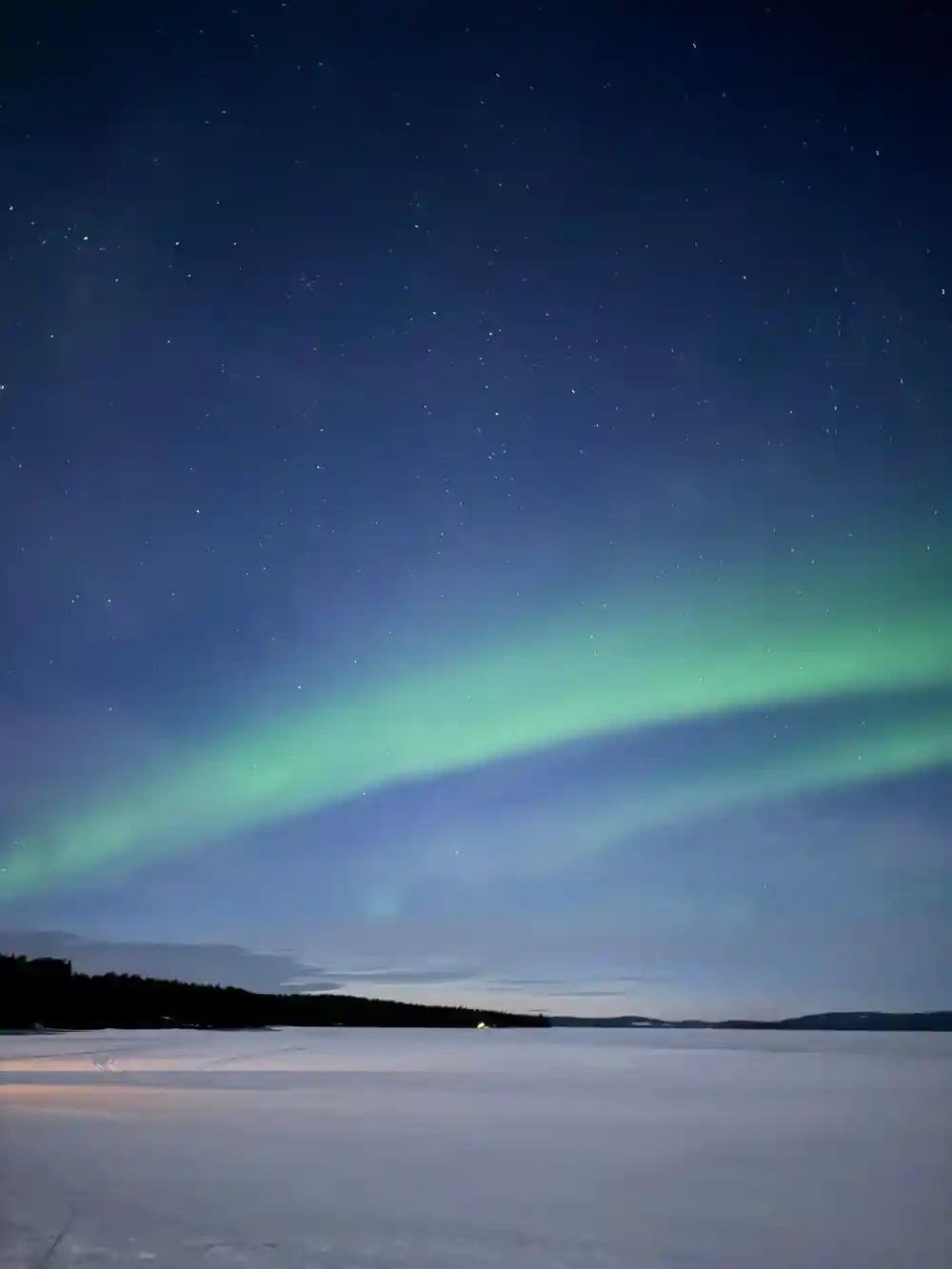
Snow light on a frozen lake, hours after the sun has gone
Diamond Dust and Light Pillars
When the air is cold enough, ice crystals form close to the ground and simply hang there, and the night fills with what looks like fine glitter caught in a torch beam. Around street lamps those crystals build vertical columns of light, and around the moon they draw a ring. January in Rovaniemi averages between -30 and -15 degrees Celsius, so this is not exotic weather, it is the ordinary state of a clear winter night.[3]
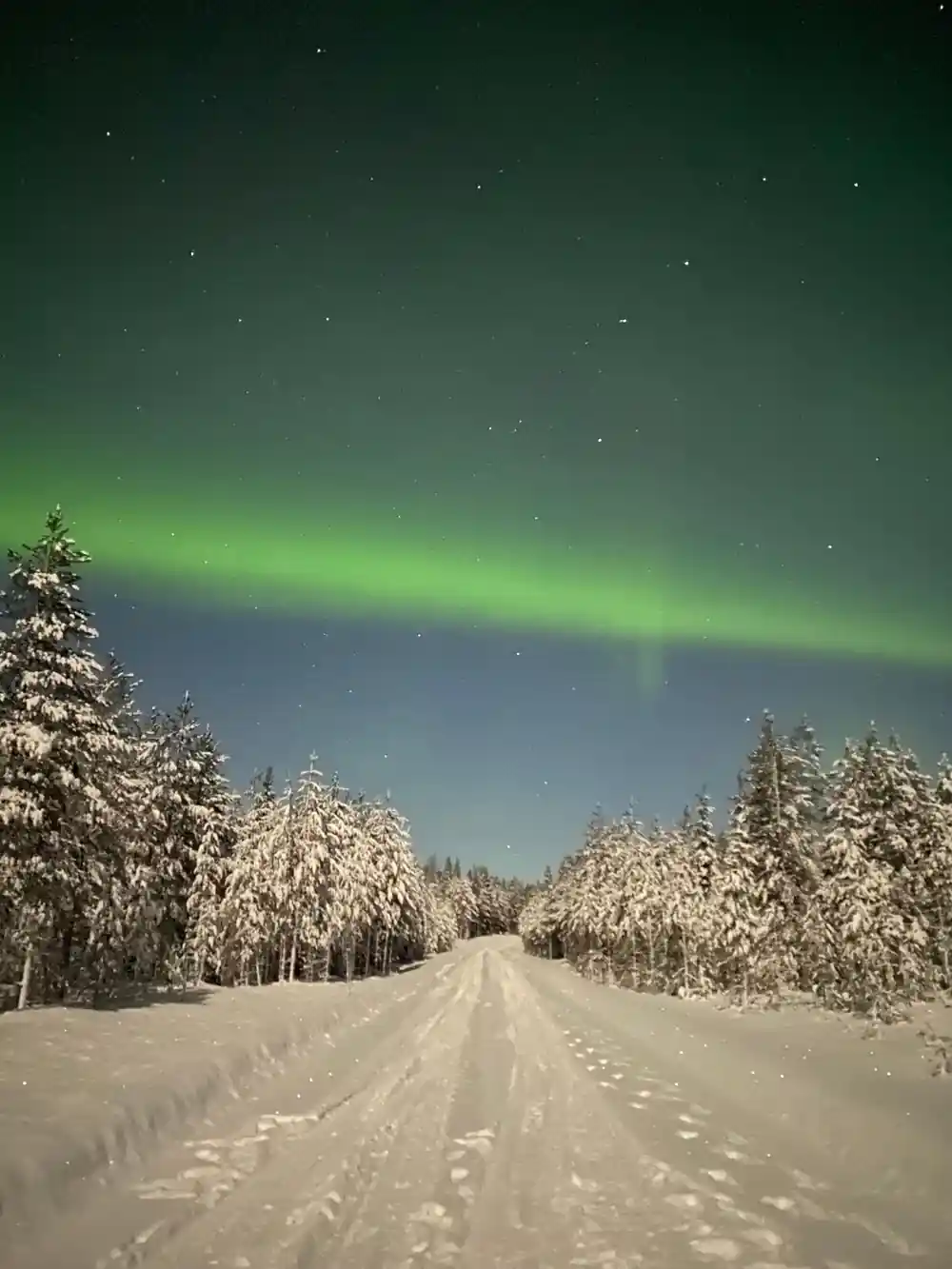
Snow keeps the landscape bright long after dark. Rovaniemi typically receives 150-200 cm of snowfall per winter, and the snowy part of the winter can last 6-7 months.[4] That cover catches every scrap of light going, from the moon, from the stars and from the aurora itself, and a night with no lamps at all still shows you the shape of the trees, the road and the frozen lake. Photographers love this soft, even light, and it is also why a white balance setting made for a summer city will look wrong here.
A torch beam is the best way to see this weather clearly. Shine it sideways through the air on a cold night and you may catch a sparkle of crystals hanging at head height, a sign that the air is working on something. Put the torch away again quickly. Your night vision is worth more than the view of a beam.
Animals Moving Through the Lapland Night
Arctic Rovaniemi shares its dark hours with reindeer, hares, foxes and ptarmigan, and they do not keep the hours we do. Reindeer move through the forest in the dark, ptarmigan sit under the snow, and hares and foxes cross tracks you will find again in the morning. There were 186,776 reindeer in Finland in the reindeer husbandry year 2013-14 according to the Reindeer Herders Association.[5] Seeing any of it is a matter of quiet and luck rather than planning, and headlights usually arrive before you do.
Sound and scent carry strangely in the cold, and animals often know you are there long before you know about them. Walk slowly, talk quietly, and give anything with antlers plenty of room, especially in the months when they are hungry and tired. On the road, drive as though a reindeer could be standing in your lane around the next bend, because in Lapland that is a reasonable assumption. If you are out with a guide, ask what has been seen locally that week, and let the answer shape where you go.
from US$228
The Northern Lights Tour with Guaranteed Sightings runs 8 hours, a group limited to 8 participants, a live guide in English.[6]
The Squeak of Snow at Deep-Freeze Temperatures
At very low temperatures snow stops being soft. The crystals stay dry and sharp, and every step makes a squeak, a creak or a high squeal that sounds like something breaking underfoot. It is the sound people remember from a cold night walk more than any other, and it works as a rough thermometer: the sharper and higher the squeak, the drier and colder the snow. Clothing rustles in the same dry air, gloves squeak against a metal handrail, and a zip seems to be heard from across the lake.
Dressing for this is the difference between a memorable night and a short one. A thermal suit used for Arctic activities can be rated to minus 40, but a damp cotton base layer defeats its insulation, so start with wool or a synthetic layer against your skin and keep cotton for the hotel.[9] Boots with room for a thick sock, mittens rather than gloves, and a hat that covers your ears will carry you through hours of standing still. Hand warmers, a flask and a spare pair of socks are small things that make a long hunt comfortable.
Can You Actually Hear the Aurora?
People have listened for the northern lights for a long time. The Finnish word for them is revontulet, which literally means fox fires, and a Sami legend says the lights are caused by a magical fox running across the Arctic fells.[13] Reports of crackling, clapping or rustling during bright displays go back generations, and they are worth taking seriously as an experience, even though the aurora forms far above the weather and its light reaches us in silence.
Most of what people hear at that moment is closer to hand: fabric stiff with cold, snow compacting under boots, hair lifting under a wool hat, the metallic ticking of a camera in the frost. Cold air is dense and carries sound well, so a distant dog, a snowmobile or a branch cracking can arrive from much further away than you would expect. The result is a night that feels loud even when nothing is making a sound.
If you want to test it for yourself, stand still, hold your breath and listen for a moment during a bright burst. What you notice most is the silence of everything else: no traffic, no birds, no leaves. That contrast is part of the appeal, and it is a good reason to leave the music and the engine noise behind when the lights appear.
Satellite Trains and the Frozen Lake at Midnight
Look up for long enough and something will cross the stars at a steady, unnatural speed. Satellites pass over in ones and twos, sometimes in long lines after a recent launch, and the space station is bright enough to be mistaken for an aircraft until it vanishes without blinking. On a frozen lake, with the ice creaking and booming as it shifts in the cold, the sky has company from below as well as above.
That is the version of a Rovaniemi night most people hope for, and it is the one the guided hunts are built around. The Northern Lights Tour with Guaranteed Sightings runs 8 hours with pickup included, a live guide in English, a group limited to 8 participants, and a guarantee of northern lights viewing or a refund if conditions are impossible.[6] December is the busiest stretch, with up to 10,000 airport arrivals per day, part of a year that saw 1.2 million overnight stays in 2023.[14]
The Arctic Circle runs through Santa Claus Village, eight kilometres north of the city centre, where it is clearly marked, so you can stand with one boot in each half of the map before heading out into the dark.[15] Solar Cycle 25 is expected to have a double peak, extending the window for aurora activity well into 2026.[16] Around midwinter, the polar night in Rovaniemi lasts for 2 days, and the weeks either side of it give you long, dark evenings for watching whatever the sky decides to do.[17]
Aurora colours and the height they come from
Altitude and colour figures come from[2].
Aurora tours compared by from price
From prices in US dollars per person for these GetYourGuide listings:[6][7][8][18].
When to plan your night out
Read the night sky
Check the forecast
Look at cloud cover and the Kp index before you commit; the Kp index ranges from 0 to 9.[11]
Get out of the town
Even a short drive from the streetlights makes faint stars, the Milky Way and gentle aurora visible.
Let your eyes adjust
Give yourself a long, lamp-free stretch; red light preserves what your eyes have built up.
Dress for standing still
A thermal suit used for Arctic activities can be rated to minus 40, and a damp cotton base layer defeats its insulation.[9]
Stay out longer
The Northern Lights Tour with Guaranteed Sightings runs 8 hours, which leaves time to drive and wait.[6]
Book the guaranteed aurora hunt for your Rovaniemi nights
from US$228Reserve now & pay later